Where to Invest in Kansas City: Best Areas for Rentals
November 8, 2026
For most rental investors, the best places to invest in Kansas City are the Missouri-side submarkets where purchase prices are still low compared with rent: Independence, Raytown, Blue Springs and parts of Northeast and Midtown Kansas City. Lee’s Summit and Overland Park suit investors who want lower turnover and steadier tenants over a higher yield. The right pick depends on your budget, how hands-on you want to be and how much risk you will carry. Below you will find the numbers by area, the local costs that change your return and a way to compare deals before you buy.
TL;DR
- Lower-priced Missouri-side areas (Northeast KC, Midtown, Raytown, Independence) show the highest gross yields in published 2026 guides, but they ask for more inspection and management.
- Suburbs such as Blue Springs and Lee’s Summit trade yield for school districts, longer tenancies and lower turnover.
- Property tax, wind and hail insurance and financing terms can move your real return by more than a small rent difference, so underwrite them first.
- Missouri and Kansas follow different tax and rental rules, so decide which side of the state line you are buying on before you run numbers.
- The return is made at purchase: price, condition and a realistic expense budget matter more than hoping for rent growth.
Table of Contents
- Why investors look at Kansas City
- Kansas City investment areas compared
- Costs that change your return
- Rental rules to know before you buy
- How to compare a deal before you buy
- Which area fits which investor
- Our perspective: buy well, then run it like a business
- Work with Auben in Kansas City
- FAQ
- Sources
Why investors look at Kansas City
Kansas City draws rental investors because entry prices are modest next to coastal metros while rents are healthy for the price. One 2026 investor guide puts the metro median home price at $280,000 with an average rent of $1,350, and cites cash-on-cash targets of 9% to 11% on below-median Missouri-side purchases. Another market data page lists a median rental rate of $1,249 per month, appreciation of 3.7% a year and rent growth of 3.2% a year for the Kansas City MO-KS market.
The same data shows why you should not buy on a headline. That page also reports a median cap rate of 3.8% across the metro, so averages hide a wide gap between the cheapest and the most expensive homes. An analysis of Kansas City, MO listings found that 93% of listings under $100,000 cash-flow on paper, against 2% at $200,000 to $300,000 with 20% down at a 7% mortgage rate. Price point, not just the city, decides the result.
The metro also spans two states, dozens of suburbs and very different blocks. That variety is the opportunity: you can choose cash flow, stability or a mix, then pick the area that matches.
Kansas City investment areas compared
The table shows typical single-family purchase prices and three-bedroom rents by submarket, as published in a 2026 Kansas City investor guide. Treat them as starting ranges for your own underwriting, not quotes, because prices move by street and by condition.
| Area | Typical purchase price | Typical 3BR rent | Gross yield | Who it suits |
|---|---|---|---|---|
| Northeast Kansas City | $100K–$145K | $1,100–$1,350 | 10–12% | Experienced investors, value-add and BRRRR plays |
| Midtown / Westport-adjacent | $140K–$175K | $1,300–$1,550 | 10–11% | Investors targeting an urban renter base |
| Raytown | $150K–$190K | $1,350–$1,550 | 9–10% | Cash-flow buyers comfortable with older stock |
| Independence | $160K–$210K | $1,450–$1,650 | 8.5–10% | Buyers who want working-family demand |
| Waldo | $200K–$260K | $1,600–$1,900 | 8–9% | Buyers who want young-professional tenants |
| Blue Springs | $220K–$290K | $1,700–$2,000 | 7–8% | Long-term holds with school-driven demand |
| Lee’s Summit | $270K–$350K | $1,900–$2,300 | 6.5–7.5% | Lower turnover, premium suburb |
Gross yield is annual rent divided by price, before taxes, insurance, maintenance, vacancy and management. Net returns are lower, which the underwriting section below walks through.
Northeast Kansas City and Midtown: highest yield, most work
These areas show the strongest gross yields in the guide, and they are where buy, renovate, rent, refinance strategies are most often discussed. They also bring the most active management: older houses, more frequent turnover and block-by-block differences. The same investor guide that cites the 9% to 11% targets notes that conditions can vary block by block east of Troost, so walk the street and read the comparable rents, not just the ZIP code.
Midtown and Westport-adjacent homes draw an urban renter base. If you plan to renovate, build the scope and a contingency into your numbers before you offer.
Raytown and Independence: cash flow with working-family demand
Raytown combines modest prices with rents of $1,350 to $1,550, but much of the housing is older, so a thorough inspection of the roof, sewer line, foundation and mechanicals should come before any offer. Independence is described as the clearest cash-flow leader in a September 2026 lender guide, which cites median prices of $170,000 to $220,000, rents of $1,100 to $1,400 and cap rates of roughly 6.5% to 7%, with some stabilized properties reaching 7% to 8%. Tenant demand there is tied to logistics and healthcare employment.
Note that guides differ on rents and yields for the same area. That is normal. Use ranges, then confirm with current listings and rent comparables for the exact street.
Waldo, Blue Springs and Lee’s Summit: stability over yield
Waldo attracts young professionals. Blue Springs is known for well-rated schools and long-term tenants. Lee’s Summit is the premium suburb in the table, with the lowest yield and, according to the guide, lower turnover. Lower turnover is worth real money: every month of vacancy and every re-leasing cycle costs rent, cleaning, repairs and leasing fees.
If you are a first-time investor or an out-of-state owner, these areas often pair better with hands-off ownership, because tenants stay longer and houses are newer.
Missouri side or Kansas side
Overland Park, Olathe and Leawood sit in Johnson County, Kansas, and generally come with higher prices than the Missouri-side areas above. They follow Kansas rules rather than Missouri rules for property tax and landlord-tenant matters, so build a separate budget for each side. If you are weighing both, our Kansas City market page is a good place to start.
Costs that change your return
The table above ends at gross yield. Four local costs decide what you keep.
Property taxes
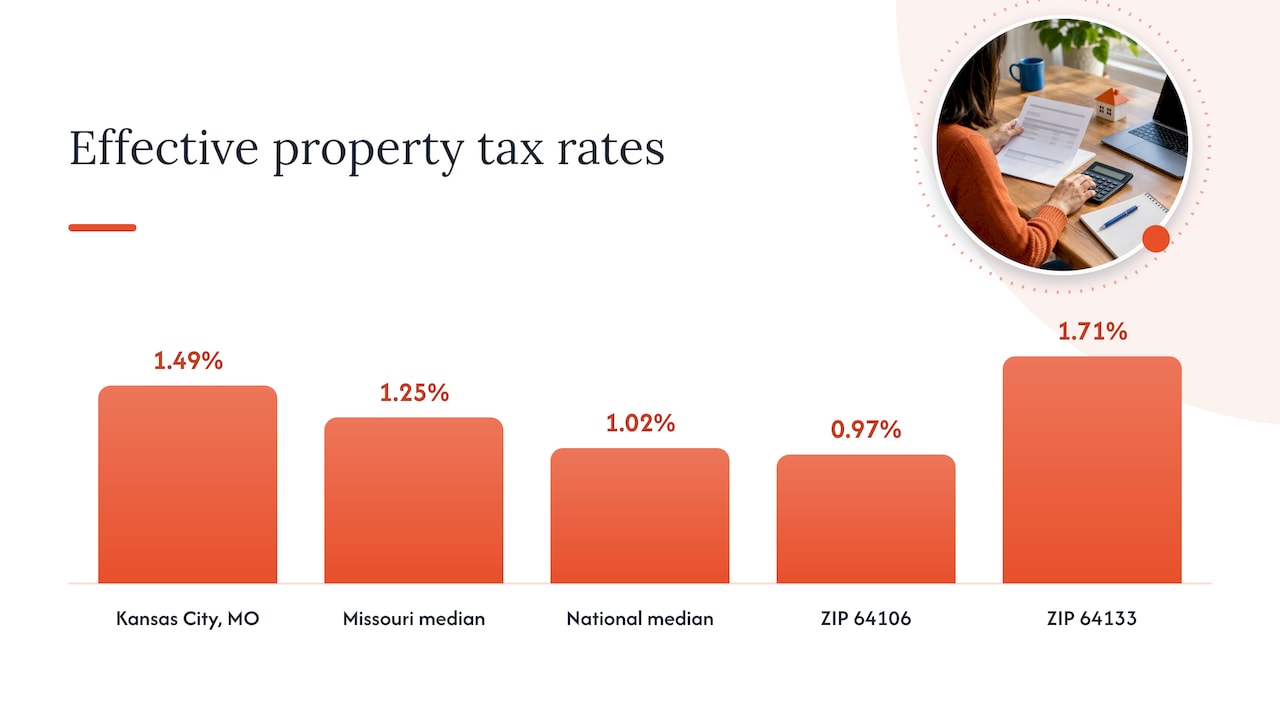
Kansas City, Missouri has a median effective property tax rate of 1.49%, above the Missouri median of 1.25% and the national median of 1.02%, and rates by ZIP run from 0.97% in 64106 to 1.71% in 64133, driven by school district levies and local taxing districts. On a $180,000 house, the gap between those two ZIP codes is more than $1,300 a year.
Jackson County has also seen sharp reassessments. One investor guide notes recent cycles with valuation jumps of 30% or more and recommends underwriting a higher tax bill and reviewing every assessment notice so you can file an appeal on time. Build that cushion into your numbers on every Jackson County purchase.
Insurance
Kansas City sits in an active hail and tornado corridor. A 2026 insurance comparison page reports average landlord insurance in Missouri at $2,809 per year and notes that percentage-based wind and hail deductibles are increasingly standard on Missouri policies. That means you should know your deductible in dollars, not just the premium, and keep a cash reserve to cover it. Roof age and condition affect both underwriting and your claim outcome, so a new or recently replaced roof is worth paying for. When you compare landlord insurance coverage, look at dwelling coverage, loss of rents, liability and the wind and hail terms side by side.
Financing
Investment loans cost more and need more cash than owner-occupied loans. A July 2026 lender guide describes standard purchase leverage of 75% to 80% loan-to-value, with some strong files reaching 85%, reserves of around six months of the full monthly obligation and credit-score tiers from a 620 floor to a 700 threshold for the highest-leverage programs. Its example: a $195,000 house renting for $1,500 a month at 80% LTV produces debt-service coverage of roughly 1.15x to 1.20x. Terms vary by lender and change with rates, so get current quotes before you fix a budget.
Maintenance and winter wear
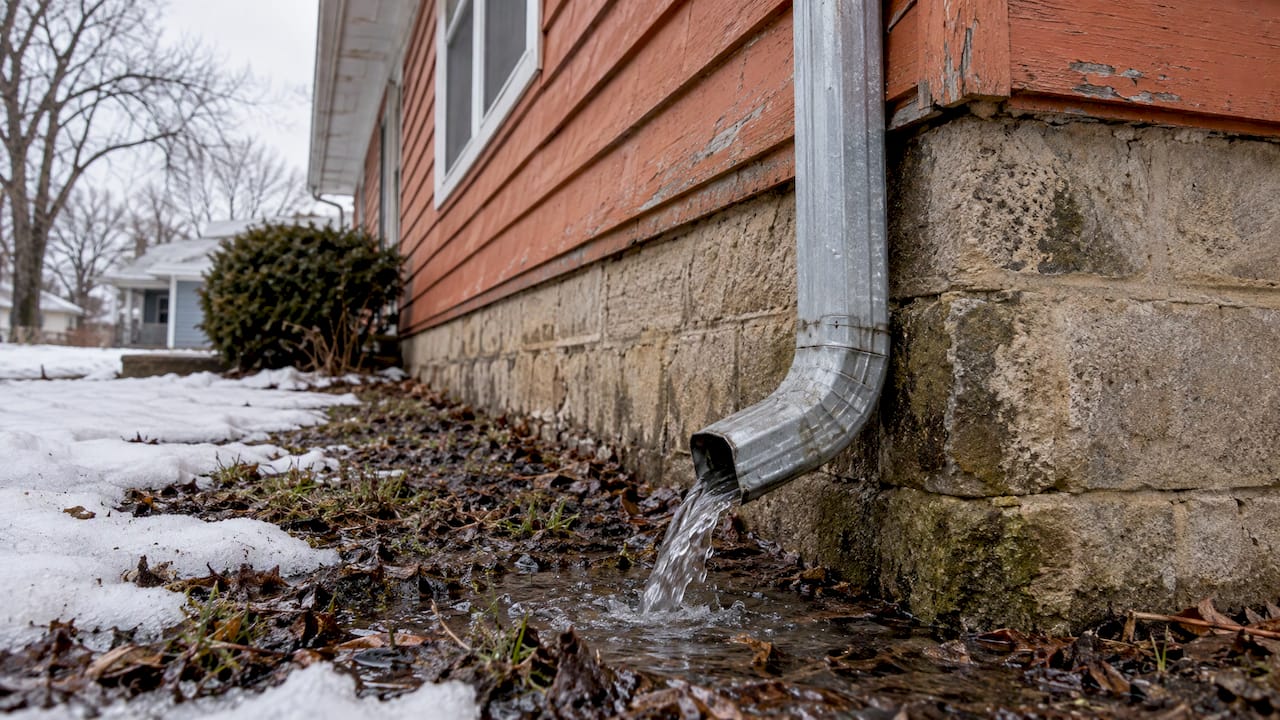
Older houses in the metro face freeze-thaw cycles, so plumbing, roofs and drainage deserve attention at inspection. Budget for capital items such as roofs, HVAC and water heaters separately from monthly repairs, and your cash-flow estimate will hold up better.
Rental rules to know before you buy
In Kansas City, Missouri, rental housing has its own permit and inspection regime. According to the Kansas City Health Department, a person may not offer a unit for rent without a valid rental permit. Inspections follow complaints and also happen as random annual routine inspections, and occupied units can be inspected only in exigent situations or with at least five days’ notice to the tenant. Bring a unit up to code before you list it, and confirm the current permit process with the city.
Kansas City, Kansas and the Johnson County suburbs have their own local requirements. Check the municipality where the property sits before you close, because a house a few blocks across a city line can follow different rules. For lease terms, security deposits and notice periods, rely on the state statutes and a Missouri or Kansas attorney, not on a general template.
How to compare a deal before you buy
A clear process keeps you from buying the yield in a brochure. Run every deal through the same steps.
- Start with the purchase price. The investor team behind one 2026 guide argues that in Kansas City the lever is the price, not the rent, because rents are anchored by what working families can pay. The return is made at the buy, when a seller faces a reassessment, an older roof or a vacant unit.
- Estimate realistic rent. Use three current comparables for the same bedroom count, condition and street, not an area average.
- List operating costs. Property tax at the ZIP’s effective rate, insurance with wind and hail terms, maintenance, vacancy, management and leasing fees.
- Add capital reserves. Roof, HVAC, water heater, sewer line and flooring, set aside monthly.
- Test the financing. Run the loan at today’s rate and again at a higher rate, and confirm that debt-service coverage stays above your lender’s minimum.
- Stress the downside. Two months of vacancy, a 30% tax reassessment and a $5,000 repair. If the deal still works, it is a real deal.
Here is a worked example with deliberately round numbers. A house bought at $190,000 renting for $1,500 produces $18,000 of annual rent, a 9.5% gross yield. Property tax at 1.49% is about $2,830, and insurance near $2,809 brings those two costs to roughly $5,640. Before maintenance, vacancy and management, you are already at about $12,360 of operating income. That is how a 9.5% gross yield becomes a lower net figure, and why the process above matters.
Which area fits which investor
- Cash-flow focused, comfortable with renovation: Northeast KC, Midtown, Raytown.
- Balanced return with working-family demand: Independence.
- Long hold with low turnover: Blue Springs, Lee’s Summit, and Johnson County suburbs on the Kansas side.
- Scale and portfolio plays: multifamily and build-to-rent, where professional management and a clear asset plan matter most.
- First-time and out-of-state investors: start in a newer or recently renovated house in a stable suburb and hire local management from day one.
Our perspective: buy well, then run it like a business
We have spent more than 15 years managing homes for owners and investors, and our team has served 2,700 properties across 10 regional markets, Kansas City among them. What we see over and over is that the area you choose matters less than how you buy and how the property is run afterward.
A strong Kansas City deal starts with a price that leaves room for taxes, insurance and repairs. After that, results come from day-to-day operations: how fast a unit is leased, how well residents are kept, how maintenance is handled and how clearly the owner sees the numbers.
That is why we built Auben around local market expertise combined with investor-focused strategies. Our pod-based team structure gives each owner a focused group that knows the portfolio. In-house maintenance and transparent vendor selection help keep repair costs and quality visible. Proactive resident retention and technology-enabled reporting support the long-term returns investors are after.
Our advice to a first-time Kansas City investor is simple: pick the area that fits your tolerance for hands-on work, underwrite conservatively and put management in place before you close, not after the first vacancy.
MediaBeast
Work with Auben in Kansas City
Auben Realty is a full-service real estate investment and property management firm. If you are choosing where to buy, our brokerage services team can help with acquisition and sales, and our property management team handles leasing, tenant placement, maintenance and day-to-day owner reporting. For larger portfolios, we offer asset management and multifamily and build-to-rent services.

Renovating before you rent? Our project management service oversees scope and vendors so the work stays on budget. Talk to us through the Kansas City management page, and see what a managed rental looks like in our Kansas City homes for rent. You can also read our view on why Kansas City works for cost and livability.
FAQ
What is the best area to invest in Kansas City for cash flow?
Published 2026 guides show the highest gross yields in Northeast Kansas City, Midtown, Raytown and Independence, with ranges from roughly 8.5% to 12% before expenses. These areas usually need more inspection and more active management. Compare net numbers after taxes, insurance and repairs, not gross yield alone.
Is Kansas City a good market for first-time investors?
It can be, because prices are moderate and rents are healthy for the price. First-time investors often do better in stable suburbs such as Blue Springs or Lee’s Summit, or in a renovated house in Independence, and with professional management from the start. Run the stress test above before you commit.
How much are property taxes on a Kansas City rental?
The median effective rate in Kansas City, Missouri is about 1.49%, with ZIP codes ranging from 0.97% to 1.71%, according to the tax data above. Reassessments in Jackson County have been large, so budget for a higher bill and review every notice for appeal deadlines.
Do I need a permit to rent out a house in Kansas City, Missouri?
Yes. The city’s health department states that a unit may not be offered for rent without a valid rental permit, and units can be inspected after complaints and on a random annual basis. Confirm current steps and fees with the city before listing.
Sources
- DSCR Loans in Kansas City, MO: 2026 Investor Guide
- Rental Property Investing: Top 10 KC Neighborhoods
- Investing in Kansas City Real Estate: 2026 Investor’s Guide
- Kansas City, MO-KS Real Estate Market
- Kansas City, MO Rental Property Returns by ZIP Code (2026)
- Kansas City, Jackson County, Missouri Property Taxes
- 2026 Missouri Rental Property Insurance
- Investment Property Loans in Kansas City
- Kansas City Missouri Health Department rental permit document
- Landlord insurance coverage