Overland Park Rental Market: Rents, Vacancy and Demand
October 26, 2026
The Overland Park rental market is steady, tight and expensive for its region. Apartments typically list in the high $1,000s to low $1,500s per month depending on the source, single-family houses ask well above $2,000, and the city’s own housing study shows a renter vacancy rate near 5% and a long gap between the homes it needs and the homes it is building. This guide gives the numbers, explains what sits behind them, and shows what they mean whether you are renting or owning a rental.
TL;DR
- Rent figures for Overland Park vary by source and property type. Apartment averages cluster around $1,400 to $1,550 a month, and houses average about $2,200.
- The city’s housing study puts renter-occupied vacancy at 5.2% and counts 38.5% of households as renters.
- Overland Park has permitted about 696 homes a year in 2020 to 2024, against a stated need of 1,420 a year through 2030, which supports rents.
- Owners need a city rental license, and the city inspects exteriors and common areas. Budget for property tax, licensing, maintenance and vacancy before you count profit.
Table of Contents
- What renters pay in Overland Park
- How rents differ by neighborhood and ZIP code
- How tight the market is
- What drives rental demand
- Affordability and what renters should expect
- Landlord rules and costs in Overland Park
- Where investors find opportunity
- Our perspective: what the numbers mean in practice
- Managing a rental in Overland Park with Auben
- FAQ
- Sources
What renters pay in Overland Park
There is no single official rent number for the city, and the listing sites disagree because they measure different things: asking rents, new leases, apartments only, or every property type. Reading them side by side gives a usable range.
| Measure | Figure | Source |
|---|---|---|
| Average apartment rent | $1,548 | Point2Homes |
| Average apartment rent, last month in a 2026 guide | $1,368 | Ark7 renting guide |
| Average house rent, same guide | $2,228 | Ark7 renting guide |
| Median rent, all property types (May 2024 snapshot) | $2,038 | Zillow Rental Manager |
A few patterns hold across all of them.
- Apartments sit roughly $700 to $900 below houses. A renter who needs three bedrooms, a garage and a yard pays a clear premium.
- The range is wide. Listings run from under $1,000 for older small units to several thousand dollars for large houses, so an “average” describes few real leases.
- Figures move month to month. The Zillow page above is a 2024 snapshot, and it is useful mainly as a reference point for how far asking rents have drifted since. Check live listings before you set a budget or a price.
If you are comparing, use the same property type and bedroom count on every site. A studio average and a three-bedroom average cannot be mixed.
How rents differ by neighborhood and ZIP code
Overland Park is large, and rents follow age of housing, proximity to employers and shopping, and school boundaries. Without a single reliable neighborhood dataset, think in broad zones rather than exact dollar figures.
- Northern and older areas (such as the 66204 and 66212 ZIP codes). Smaller apartments, older duplexes and townhomes, and the lowest entry rents. Duplexes and townhomes with three bedrooms near the north end have been advertised at roughly $2,100 to $2,300 a month, according to one 2026 listing page.
- Downtown Overland Park and Metcalf corridor. Walkable, mixed-use, and mostly apartments. Listing sites put the Downtown neighborhood average in the mid-$1,500s, with rentals ranging from about $1,400 to about $1,850.
- South of 135th Street and the southern ZIP codes. Newer subdivisions, larger single-family homes, and the top of the rent range.
Prices in a given ZIP code change quickly because a handful of listings can swing the average. Thirteen active listings in one ZIP code, for example, say very little about a year of leasing.
How tight the market is
Vacancy is the best single number for how much leverage a renter or landlord has. The City of Overland Park’s Housing Needs Analysis, a January 2026 draft built on 2019 to 2023 Census estimates, reports:
- renter-occupied vacancy of 5.2%,
- overall vacancy of 4.8% for Johnson County,
- a housing mix of 61.5% owner-occupied and 38.5% renter-occupied.
A vacancy rate around 5% is generally read as balanced to slightly tight. Units do not sit empty for long when they are priced to the market, but renters still have choices. Landlords who overshoot on rent tend to feel it in days on market rather than in a failed lease-up.
A caution on those figures: they are survey estimates from a multi-year window, not this month’s occupancy. They tell you the shape of the market, and your own property’s performance depends on price, condition and presentation.
What drives rental demand
Three forces show up in the city’s own analysis.
Jobs and commuting. The same study notes that housing demand reflects local needs and the chance to attract workers who commute into the city. Overland Park is one of the largest employment centers in the Kansas City metro, so it competes for renters with Kansas City, Missouri, Olathe and Lenexa.
Schools and suburban appeal. Strong school districts make families willing to rent a house for a year or two before buying, which keeps demand for single-family rentals steady.
Limited new supply. Overland Park needs to build an average of 1,420 housing units a year through 2030, but permitted an average of 696 a year from 2020 to 2024, per the same city analysis. Construction has leaned toward single-family homes and large apartment complexes, with few of the 3 to 12 unit buildings that often serve middle-income renters.
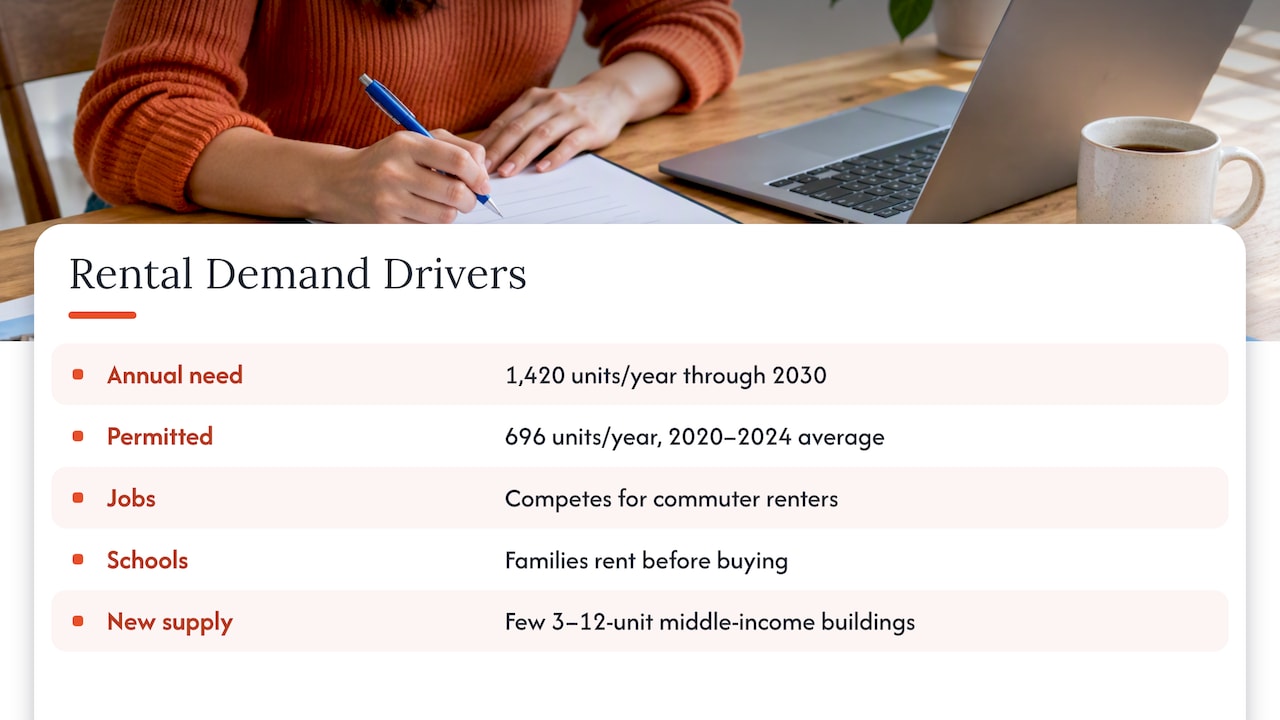
That last point matters most for anyone planning a rental. When supply runs at roughly half of the stated need, rents rarely fall for long.
Affordability and what renters should expect
The median household income in Overland Park was $103,838 in the city’s analysis, which is high. It is also why rents are high: higher-income households compete for the same stock. The study found that 39.7% of renters were cost-burdened, meaning they spend more than 30% of income on housing, and that higher-income households were taking up some units that would be affordable to lower-income ones.
For renters, that translates into a few practical habits:
- Apply fast with complete paperwork. Pay stubs, ID and prior landlord contact details ready on day one.
- Expect income screening. Many landlords ask for gross monthly income around three times the rent. It is a common practice, not a legal rule, and requirements differ by owner.
- Know your credit picture before applying. Minimum credit scores for houses vary by landlord, and a larger deposit or a co-signer can sometimes offset a thin file.
- Compare total cost. Apartment rent often includes trash, water or amenities. A house usually adds utilities, lawn care and a pet fee.
Landlord rules and costs in Overland Park
Anyone renting out a property needs to treat the city’s rules as part of the business plan.
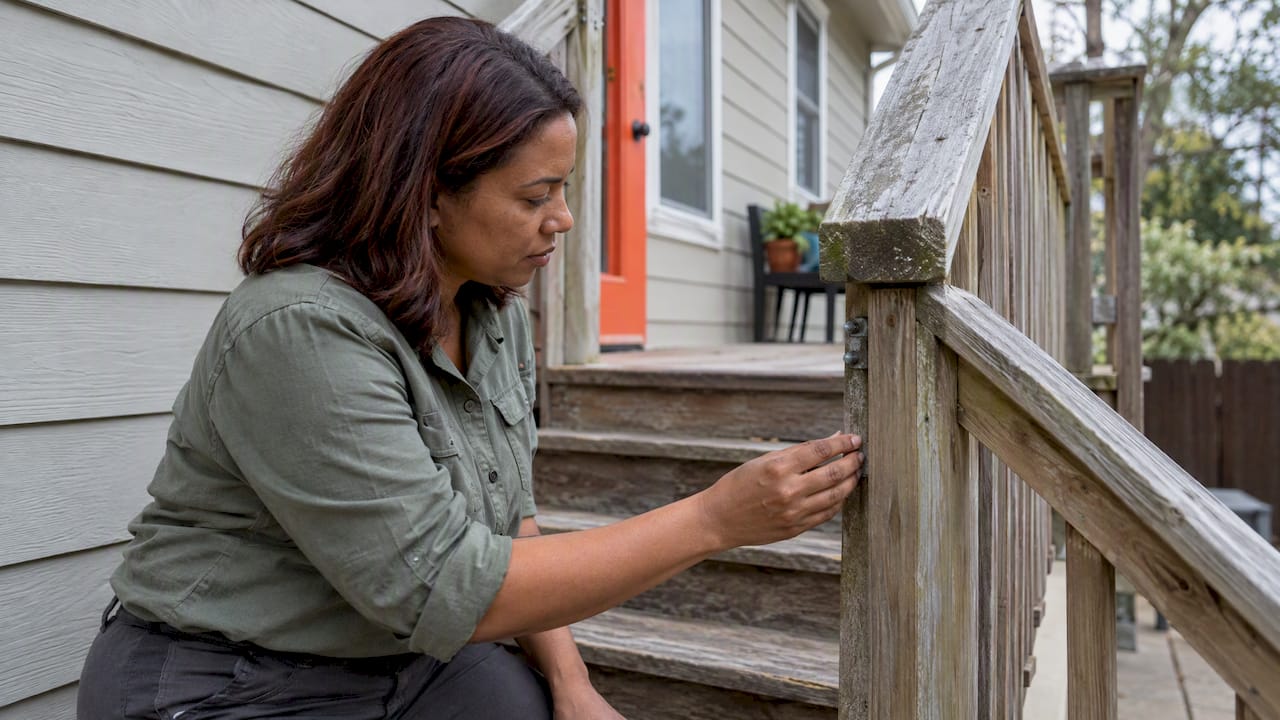
Licensing and inspection. A rental license is required for every rental home in Overland Park. The city’s program page lists what inspectors look at: premises identification, exterior wall surfaces, openings, roofs, stairs, decks and similar exterior conditions. Confirm the current fee and renewal cycle on the city page before you buy or list, because those can change.
Short-term rentals. Renting for fewer than 30 days still falls under the rental license, and the property has to meet maintenance and safety standards. Confirm current rules with the city before you plan around nightly rates.
Property tax. Effective rates in the city are reported around 1.17% to 1.22% of market value, and your bill depends on the school district’s mill levy. On a $450,000 house, that is roughly $5,300 to $5,500 a year, before insurance.
A simple profit check
Most landlords overestimate profit because they count rent and mortgage but skip the rest. A realistic monthly check for a house renting near $2,200 includes:
- property tax and insurance,
- a maintenance reserve (many owners set aside 5% to 10% of rent),
- vacancy allowance (one month a year is about 8%),
- management and leasing fees, if you hire out the work,
- license and inspection compliance.
Run the numbers with your own purchase price and financing. Profit margins differ widely, and a property that looks strong on gross rent can be thin once these are in.
Where investors find opportunity
The supply gap points to the middle of the market. Duplexes, townhomes and small multifamily are the property types the city says it is building least of, and renters are asking for them. Some investors add leasable square footage by finishing basements in duplexes and townhomes, which can lift rent if it is permitted and done well.
Build-to-rent single-family communities are a second route, and they pair well with the strong demand for houses among families who are not ready to buy.
And owners who decide to exit have options. If you are weighing a sale rather than a hold, why landlords sell rental properties covers the common reasons, from tenant problems to repair costs, and is a useful way to test your own situation.
Our perspective: what the numbers mean in practice
We manage rentals across 10 regional markets, including Kansas City and Overland Park, and the pattern we see is that the gap between a good landlord result and a poor one is rarely the market. It is the operation.
Most vacancy loss comes from slow turns and mispriced listings, not from a lack of renters. Most surprise costs come from deferred maintenance that gets expensive. That is why we run a pod-based team structure, so each owner and resident deals with a small team that knows the property, and why we keep maintenance in-house and select vendors transparently. When the same people handle repairs, leasing and resident communication, units turn faster and residents stay longer, and retention is the cheapest way to protect return.
We also push owners to price to the local market instead of to a target number. In a market with vacancy near 5%, a few days of vacancy cost more than the extra $25 a month an aggressive price might earn.
For first-time investors, our advice is to buy to the numbers, not to the neighborhood. Know your tax, insurance, reserves and licensing costs before you make an offer.
— MediaBeast
Managing a rental in Overland Park with Auben
If you own or plan to buy a rental in the Kansas City metro and would rather not run it yourself, our property management team for Kansas City and Overland Park investors handles leasing, tenant placement, maintenance and resident retention. Buying or selling? Our brokerage services cover acquisition and sales, and our multifamily and build-to-rent services are built for investors looking at the supply gap described above. Fees are quoted per property, so ask for a proposal based on your actual home or portfolio.
For a look at how the wider metro is moving, our piece on what happens after Kansas City’s World Cup rental spike explains how short-term demand surges can cool.
FAQ
What is the average rent in Overland Park?
It depends on the property type and the source. Apartment averages typically fall between about $1,370 and $1,550 a month, and houses average around $2,200. Compare the same bedroom count and property type, and check live listings for current asking prices.
Is Overland Park a good place to invest in rental property?
The fundamentals are strong: a high median household income of $103,838, renter vacancy around 5.2%, and new construction running well below the city’s stated need. Returns still depend on your purchase price, property taxes, reserves and management costs, so underwrite each property individually.
Do I need a license to rent out a home in Overland Park?
Yes. The city requires a rental license for all rental homes, and it inspects exteriors and common areas as part of the program. Check the city’s rental licensing page for the current fee and renewal timing.
What income do I need to rent in Overland Park?
There is no citywide rule. Many landlords ask for gross income of about three times the monthly rent, plus a credit and rental history check. With a median rent above $2,000 for houses, that means roughly $6,000 or more in monthly income for many listings.
Sources
- City of Overland Park Housing Needs Analysis (draft, January 2026)
- Rental Licensing and Inspection, City of Overland Park
- Rental Licensing and Inspection program page, opkansas.gov
- Point2Homes: Overland Park average rent
- Ark7: Overland Park house renting guide
- Zillow Rental Manager: Overland Park market trends
- Listing for 8337-8339 Farley St, Overland Park
- Why Landlords Sell Rental Properties: 2026 Guide