Skip to content

Building Communities, Not Just Homes

Auben Realty’s Partnership with Ellavoz Impact Capital at Cedar Creek Estates

As Jacksonville continues to experience rapid growth, the demand for quality housing options has never been greater. Cedar Creek Estates, a Build-to-Rent (BTR) community located on Jacksonville’s Westside, was created to help meet that need by offering residents the comfort and privacy of a single-family home with the flexibility and convenience of renting. 

Owned by Ellavoz Impact Capital and professionally managed by Auben Realty, Cedar Creek Estates represents more than just a new housing development. It reflects a shared commitment to providing attainable and high-quality housing opportunities for individuals and families in Jacksonville. 

The Rise of Build-to-Rent Communities 

Build-to-Rent communities have grown in popularity as housing needs continue to evolve. Designed specifically as rental communities, BTR developments offer many of the benefits traditionally associated with homeownership,while maintaining the flexibility that renting provides. 

For many residents, a Build-to-Rent home serves as the perfect middle ground between apartment living and homeownership. Whether someone is relocating to a new city, prefers not to take on the responsibilities of homeownership, or simply values the convenience of professional property management, BTR communities provide an attractive alternative. 

Residents at Cedar Creek Estates enjoy features such as private fenced yards, attached garages, modern floorplans, and the added privacy that comes with living in a detached single-family home, rather than sharing walls with neighboring apartments. Professionally managed maintenance services also provide peace of mind, allowing residents to focus on enjoying their home and community. 

For some, Build-to-Rent communities can even serve as a steppingstone toward future homeownership by offering the experience of living in a single-family home while maintaining rental flexibility. 

Introducing Cedar Creek Estates 

Cedar Creek Estates consists of 45 newly constructed single-family homes designed to accommodate a variety of lifestyles and household needs. Featuring three thoughtfully designed floor plans, the community appeals to families, working professionals, retirees, and anyone seeking a high-quality rental experience. 

Located on Jacksonville’s growing Westside, Cedar Creek Estates offers residents the opportunity to enjoy modern living in a professionally managed community while remaining conveniently connected to employment centers, schools, shopping, dining, and recreational opportunities throughout the city. 

In recognition of those who serve our communities, Cedar Creek Estates proudly offers discounts for active and retired military members, educators, and first responders. 

A Partnership Focused on Quality Housing 

The partnership between Ellavoz Impact Capital and Auben Realty combines investment and development expertise with comprehensive property management services. 

Ellavoz Impact Capital has built its mission around creating workforce and attainable housing opportunities that positively impact communities. Through developments like Cedar Creek Estates, Ellavoz continues to invest in communities that provide long-term value for both residents and the surrounding area. 

As Chris Ferry, VP of Ellavoz Impact Capital, shared in Auben Realty’s most recent Investor Newsletter, Cedar Creek Estates was developed as a thoughtful response to Jacksonville’s growing housing needs. The community was designed to provide high-quality housing while supporting responsible growth and long-term community investment. 

Auben Realty supports that vision by providing full-service property management, overseeing leasing operations, maintenance coordination, resident relations, and the overall resident experience. Together, Auben and Ellavoz are committed to creating a community that extends beyond simply providing housing. 

This partnership reflects a shared belief that successful communities are built through thoughtful development, responsive management, and a commitment to the people who call these communities home. 

Looking Ahead 

Jacksonville remains one of Florida’s fastest-growing markets, creating exciting opportunities for continued investment and housing development throughout the region. 

For Auben Realty, Cedar Creek Estates represents an important milestone as the company expands its presence in Jacksonville. We are excited to serve Jacksonville residents, build lasting relationships within the community, and support the city’s continued growth through exceptional property management and resident experiences. 

At Cedar Creek Estates, the focus extends beyond building houses. It is about creating a place where residents can feel at home and enjoy a high-quality living experience. 

Cedar Creek Estates represents what can happen when thoughtful development and dedicated property management come together with a shared purpose. As Auben Realty continues to expand throughout Jacksonville, we remain committed to building communities, creating exceptional resident experiences, and partnering with organizations like Ellavoz Impact Capital that share our vision for the future of housing. 

To learn more about Cedar Creek Estates, visit: www.cedarcreekrentalhomes.com


This week’s blog post comes to us from Taylor Moore!

To learn more about our partnership with Ellavoz Impact Capital, check out the latest episode of Real Estate Rewind with Tyson Schuetze!

Spotify: https://heyor.ca/lHwn2t

Apple Podcasts: https://heyor.ca/Z1owCV

Chattanooga Isn’t the Same City I Grew Up In — And It’s a Good Thing

I was born and raised in Chattanooga, and if you’ve lived here for any length of time, you’ve seen the transformation firsthand.

The Chattanooga I remember growing up in is very different from the Chattanooga we see today. What was once viewed as a small city tucked between Nashville and Atlanta has become a destination in its own right. Over the years I’ve watched new businesses move in, tourism explode, outdoor recreation become part of the city’s identity, and investment pour into neighborhoods that many people overlooked for decades.

As someone who works in property management and real estate every day with Auben Realty, I have also had a front-row seat to how those changes have impacted housing.

When people ask me if Chattanooga is still growing, my answer is simple: just look around.

Look at the development taking place downtown. Look at the restaurants opening across the city. Look at the investment along the riverfront. Look at the number of people moving here from larger markets looking for a better quality of life. Chattanooga is no longer a city people pass through. It is increasingly becoming a city people intentionally choose.

One of the most interesting things I’ve witnessed is how many different types of people are arriving here. Young professionals are attracted by remote work opportunities and the outdoor lifestyle. Families appreciate the affordability compared to larger metropolitan areas. Retirees are discovering they can enjoy four seasons, access quality healthcare, avoid a state income tax, and still maintain a lower cost of living than many traditional retirement destinations.

The numbers support what many of us have been seeing with our own eyes. Over the past decade, household growth in the Chattanooga area has significantly outpaced new housing inventory. More people are moving here than the market has been able to accommodate with new housing construction. Vacancy rates have tightened, and demand for both rental housing and homeownership remains strong.

For those of us in property management, this creates both opportunities and challenges. 

The opportunity is obvious. Demand remains healthy. People want to live here. Investors continue to recognize Chattanooga as one of the most attractive secondary markets in the Southeast.

The challenge is ensuring that housing supply keeps pace with growth while maintaining the character that makes Chattanooga special in the first place.

What excites me most about Chattanooga’s future is that many of the factors driving growth today are not temporary trends. The outdoor amenities aren’t going anywhere. The mountain views aren’t going anywhere. The Tennessee River isn’t going anywhere. The investments being made in infrastructure, economic development, healthcare, and tourism continue to strengthen the city’s foundation for long-term growth. 

At Auben Realty, we see this every day through the investors, residents, and property owners we work with throughout the region. Demand for well-managed housing continues to grow, and I believe Chattanooga remains in the early stages of what could be another decade of meaningful expansion.

No one can predict the future perfectly, but after spending most of my life here and watching Chattanooga reinvent itself over the years, I remain optimistic about where we’re headed. 

The Chattanooga of today is stronger than the Chattanooga I grew up in, and the Chattanooga of ten years from now may be even better.


This week’s blog is brought to us by Jason Weathers!

Hear more about Jason’s insights on upcoming episodes of Real Estate Rewind with Tyson Schuetze, available on Spotify, Apple Podcasts, and YouTube!

Why Rent Payments Finally Matter

And What It Means for Residents, Investors, and Property Managers

For years, renters have faced a frustrating reality: paying rent on time every single month often did little to help them qualify for a mortgage in the future. Meanwhile, one missed credit card payment could significantly impact their credit profile. 

That may finally be changing. 

Recent updates involving Fannie Mae and Freddie Mac are creating a major shift in how mortgage lenders evaluate borrowers by allowing newer scoring models to consider rent and utility payment history during the underwriting process. 

This is a significant moment for the housing industry — especially for renters who have consistently paid on time but have limited traditional credit history. 

Why This Matters 

Historically, most credit scoring systems focused heavily on: 

  • Credit cards  
  • Auto loans  
  • Mortgages  
  • Installment debt  

Rent payments — often a person’s largest monthly expense — typically were not counted unless reported through a third-party service. 

The new scoring models, including VantageScore 4.0 and FICO 10T, are designed to incorporate alternative data such as: 

  • Rent payments  
  • Utility payments  
  • Banking trends and recurring expenses  

For millions of renters, this could create a clearer path to homeownership. 

According to estimates referenced by housing and lending sources, factoring in rental history could help millions of Americans cross minimum mortgage qualification thresholds. 

What This Means for Property Owners and Managers 

This shift is not just beneficial for residents — it could also create opportunities for investors and property managers. 

Stronger Resident Retention 

Residents who know their on-time rent payments may positively impact their future homeownership goals are often more motivated to: 

  • Pay consistently on time  
  • Maintain good standing  
  • Stay engaged with lease obligations  

Better Resident Relationships 

This creates an opportunity for property management companies to become more than just rent collectors. We now have the ability to help residents build financial credibility while they rent. 

That changes the conversation. 

Increased Interest in Rent-to-Own Strategies 

One of the more interesting impacts is how this may strengthen rent-to-own opportunities. Historically, one of the biggest concerns with rent-to-own programs was uncertainty around whether tenants could eventually qualify for financing. 

If rent history becomes a more meaningful factor in mortgage approvals, investors may feel more confident offering pathways to ownership for long-term residents. 

The Human Side of the Conversation 

This shift also highlights something the industry has known for years: 

Many renters are financially responsible — they simply have “thin” credit files. 

A resident may have: 

  • Paid rent on time for 5 years  
  • Never missed utilities  
  • Maintained stable employment  

…but still struggle to qualify for a traditional mortgage because they lacked enough revolving debt or traditional loan history. 

That disconnect has prevented many qualified individuals from becoming homeowners. 

This update begins to close that gap. 

Important Reality Check 

While this is a positive step, rent reporting is not automatic in many cases. Reporting still often requires: 

  • A landlord or property manager participating in a reporting program  
  • A third-party reporting service  
  • Or lender verification through bank statements and lease documentation  

Additionally, rent history alone will not offset major financial issues such as: 

  • High debt  
  • Collections  
  • Late credit payments  
  • Excessive utilization  

But for renters with strong payment habits and limited credit history, this could be a meaningful advantage. 

What Property Management Companies Should Consider 

As the industry evolves, property management companies should begin evaluating: 

  • Rent reporting partnerships  
  • Resident financial education  
  • Lease-to-own opportunities  
  • Improved resident communication around credit building  

This is especially important in the single-family rental space, where many residents already view the home as long-term housing rather than temporary living. 

Final Thoughts 

The housing industry is continuing to evolve, and this change reflects a broader shift toward recognizing real-life financial responsibility — not just traditional debt usage. 

For residents, it creates hope and opportunity. 

For investors, it may create stronger long-term residents and new exit strategies. 

And for property managers, it is another reminder that the resident experience goes beyond maintenance requests and lease renewals. Helping residents succeed financially can ultimately strengthen the entire rental ecosystem. 

In many ways, the industry is finally beginning to recognize something renters have known all along: 

Paying your rent on time should count for something. 


This week’s blog post comes to us from Brandie Mejia!

Reflecting on the 2026 IMN Conference in Miami

The past several conferences have been dominated by the uncertainty of the housing affordability bill, something that is very much still on the minds of all of the participants. Instead of focusing on that since we still do not know what that will bring, I’d like to focus on some other themes that stood out.  What stood out to me most from this IMN conference wasn’t any single statistic or prediction, it was the realization that the housing industry is adapting to a completely different type of consumer than it was built for twenty years ago. The American Dream hasn’t disappeared, but it has definitely evolved. Ownership used to be the end goal for almost everyone. Now, flexibility, convenience, and optionality are becoming just as important as equity. 

That shift is influencing everything from development trends to operations to investment strategy. More people are renting by choice, not necessarily because they’re financially incapable of buying. Younger generations especially view ownership differently. This is a generation comfortable renting cars, clothes, music, movies, and even software. Housing is naturally moving in that same direction. The urgency to acquire a home simply isn’t what it once was, and I think the industry is finally starting to accept that reality instead of fighting it. 

What’s interesting is that this doesn’t necessarily signal weakness in housing. In many ways, it is creating opportunity. Build-to-rent is a perfect example. For years, people associated build-to-rent with massive suburban communities containing hundreds of homes. Now, operators are realizing it can work at a much smaller scale. A scattered infill property or townhome development can fit the same model if the operations and resident experience are executed correctly. One speaker mentioned that nearly their entire pipeline is townhomes because density and infill have become such an important part of the equation. 

At the same time, operators are being forced to become more sophisticated. Single-family rental owners especially have had to embrace technology faster than many traditional multifamily groups simply because scattered-site portfolios demand it. You can’t efficiently manage homes spread across a market without systems, automation, and data. Smart home technology, utility monitoring, maintenance tracking, and operational analytics are now necessities.

What I found particularly interesting was how much emphasis there was on customer experience. Real estate companies are starting to behave more like service platforms than traditional landlords. The focus is shifting toward resident retention, convenience, and lifetime value. People value time just as much as money now, and operators are trying to create ecosystems around that idea. Whether it’s smart home integrations, optional resident services, or cashback incentives for on-time rent payments, the industry is clearly experimenting with ways to make renting feel less transactional and more customized. 

The word “optional” came up repeatedly, and I think that matters. Consumers today don’t want rigid systems. They want flexibility and personalization. The operators who understand how to present services correctly seem to be having the most success. 

Another major takeaway was that technology and information are no longer reserved for institutional players. There’s a democratization of data happening right now. Smaller operators have access to analytics and tools that would have cost millions of dollars not that long ago. In many ways, the advantage gap between institutional capital and entrepreneurial investors is shrinking. That doesn’t mean scale doesn’t matter, but it does mean smaller groups can compete far more effectively than they could in previous cycles. 

What also gave me confidence about the broader housing market was the economic discussion. There’s still a lot of fear online about an impending foreclosure wave or housing collapse, but the underlying fundamentals today are completely different than 2008. The speakers made the point that we’ve had many recessions throughout history, but only one true foreclosure crisis driven by reckless credit expansion. Today’s homeowners are simply in a much stronger position financially. 

The numbers support that argument. Roughly 40% of homes in America have no mortgage at all. Current LTV ratios across the market are dramatically lower than they were leading into the financial crisis. Homeowners have equity. Credit quality is significantly better. And the 30 year fixed mortgage continues to be one of the greatest financial hedges against inflation ever created. When you lock in a payment for three decades while everything else rises around you, that becomes an incredibly valuable asset over time. 

To me, the overall theme of the session was adaptation. Consumer behavior is changing, and the real estate industry is changing with it. The companies that succeed moving forward will probably be the ones that stop thinking purely in terms of units and transactions and start thinking more about experience, efficiency, flexibility, and long-term customer relationships. Housing is still fundamentally strong, but the way people interact with housing is evolving rapidly. The operators who recognize that shift early will likely have a major advantage over the next decade.


This week’s blog was brought to us by Chris de Treville.

South Carolina Hit Pause on Affordable Housing–Here’s How

South Carolina is in the middle of an affordable housing crisis. Rents are maxed. Working families are being stretched thin. And the state just quietly passed a bill that makes it harder to build the housing those families need. 

It’s called S.853. It passed on May 14, 2026. Most people haven’t heard of it because it was sold as a bill about abandoned buildings. And most of it is exactly that. But Section 5 is different. 

Section 5 freezes a property tax exemption that affordable housing developers depend on. For the next two years, if you file an application for that exemption after June 30, 2026, the state won’t even look at it. They’ll hold it in a drawer until 2027. 

Why does a property tax exemption matter? Because property taxes are a real expense. When that exemption disappears, the cost of operating an affordable housing project goes up. When costs go up, rents go up or the project doesn’t get built at all. 

Here’s an analogy. Remember when Spirit Airlines shut down? One of the only carriers keeping ticket prices genuinely low was gone, and without that competition, the bigger airlines had less reason to stay affordable. Housing works the same way. When the incentives that make below-market housing pencil out financially are stripped away, fewer developers can afford to build it and everyone else pays the price in higher rents. 

The law has one exception: nonprofits that own their properties 100% on their own, no private investment involved. That sounds reasonable until you realize almost no affordable housing gets built that way. The model that works, and that has been working, is a partnership between nonprofits and private developers. The nonprofit provides the mission and the structure. The developer provides the money, the construction team, and the risk. The tax exemption makes the whole thing viable. 

That partnership model is exactly what this freeze leaves out in the cold.

As of March 18, 2026, Governor McMaster hasn’t signed it yet. If you want to do something, call your South Carolina state representative. Ask them to amend Section 5. The window is narrow, but it’s still open.


This week’s blog was brought to us by Ivan Jenkins!

What South Carolina’s Population Boom Means for Real Estate

This week’s blog is brought to us by Market Director Claudia Gibson!


South Carolina is experiencing a population boom unlike anything seen in decades—and it’s not slowing down anytime soon. According to recent data highlighted by Fox News, the Palmetto State has officially become the fastest-growing state in the nation, driven largely by an influx of people relocating from other parts of the United States.  

A Record-Breaking Surge 

Between July 2024 and July 2025, South Carolina’s population grew by 1.5%, outpacing every other state in the country.  
Even more telling is how that growth is happening: 

  • Over 66,000 new residents moved into the state from elsewhere in the U.S. in just one year  
  • Nearly 80,000 total new residents were added during that same period  
  • A previous spike saw 100,000+ new residents in a single year (2022–2023)  

This surge is not being driven by international migration or birth rates—it’s people choosing South Carolina on purpose

Why Everyone Is Moving to South Carolina 

So what’s fueling this migration wave? 

1. Affordability & Cost of Living 
Compared to states like New York and California, South Carolina offers significantly lower housing costs and taxes, making it attractive for both families and retirees. 

2. Job Growth & Economic Expansion 
Cities like Columbia and Greenville are seeing growth in healthcare, manufacturing, and tech industries, creating new opportunities for workers.  

3. Lifestyle & Climate 
From coastal living in Charleston to quieter suburban and rural communities, the state offers a mix of lifestyle options with a generally mild climate. 

4. Remote Work Shift 
The post-pandemic workforce has changed where people choose to live—many are leaving expensive urban centers for more space and value in states like South Carolina. 

Growth Isn’t Even—It’s Concentrated 

While the entire state is growing, the majority of that growth is happening in key areas. More than 80% of population gains since 2020 have been concentrated in just ten counties, including: 

  • Charleston  
  • Greenville  
  • Lexington  
  • Richland  
  • Horry  
  • York  

This means urban and suburban hubs are expanding rapidly, while some rural areas are seeing slower growth. 

A Bigger National Trend 

South Carolina’s rise is part of a larger shift happening across the U.S. 

While overall U.S. population growth slowed to just 0.5% between 2024 and 2025, southern states continue to dominate growth due to domestic migration.  

Americans are increasingly “voting with their feet,” leaving higher-cost states and relocating to more affordable regions in the Southeast.  

What This Means for Real Estate & Communities 

For someone like you—deep in property management and real estate—this trend is huge. 

1. Increased Housing Demand 
More people moving in = more demand for rentals and home purchases. Expect continued pressure on inventory and pricing. 

2. Rising Property Values 
Growing populations often drive appreciation, especially in high-demand counties. 

3. Infrastructure Pressure 
Rapid growth can strain roads, schools, and utilities—creating both challenges and opportunities for development. 

4. Shifts in Tenant Demographics 
With newcomers arriving from higher-cost states, expectations around service, amenities, and pricing may evolve. 

The Bottom Line 

South Carolina isn’t just growing, it’s transforming. 

With strong domestic migration, expanding job markets, and an attractive cost of living, the state has positioned itself as a top destination for Americans seeking opportunity and lifestyle. But with that growth comes responsibility: managing infrastructure, housing supply, and community development will be key to sustaining this momentum. 

For real estate professionals, investors, and business owners, one thing is clear: 

South Carolina isn’t just on the map—it’s becoming the destination.

Why Americans Are Leaving and Where They’re Landing

This week’s blog is brought to us by our Market Sales Manager for our Greenville Market, Ivan Jenkins!


Policy-Driven Exodus to the Southeast’s Promised Land

Tracking the moving trucks heading south of the 36°30’N parallel, you aren’t just seeing people changing zip codes; you’re witnessing a massive financial migration that is reshaping the American landscape in ways that are almost a direct reversal of the population flows that defined 20th-century America.   

Frankly, the numbers are staggering, and people fleeing high-tax states at this pace should make any real estate board sweat.  New York experienced an approximate net loss of 114,000 domestic residents in a single year. (Fox News, April 2026) California alone is shedding about 229,000 residents annually to other states. (Coastal Moving Services, 2025). It isn’t hard to see why when anyone who can use a calculator sees the math.  New Jersey has an average property tax bill of $9500 or 2.23% annually. (MoneyTalksNews, 2026).  When you look at IRS migration data, it confirms that billions of dollars in adjusted gross income aren’t just “lost” to these states; they’re physically relocated to more competitive markets.   

So, where is all that capital heading?  It’s flooding into the Sunbelt, specifically the Southeast.  

Florida has grabbed the headlines for years and still attracts the largest share of income migration, with $36 billion in annual net income inflows, but the real story lies north of the hurricane magnet, Sunshine State. (Fox News, April 2026) South Carolina, North Carolina, and Tennessee are now posting record in-migration gains as the Florida peninsula plateaus. South Carolina, specifically, ranked second in the nation for inbound moves in 2025 according to the 2025 North American Van Lines migration study. North Carolina attracted nearly 140,000 net new residents in 2024 alone (MoneyTalksNews, 2026).  These states are no longer just retirement or spectator destinations; they are the nation’s new economic engines.  

For real estate professionals, these migration trends are significant beyond just population counts.  Savvy investors, brokers, and practitioners recognize that people leaving New York, New Jersey, and California aren’t leaving broke. They’re smuggling in equity from markets where the median home price can be $800,000 or more. California’s median home price is $809,227 (Coastal Moving Services, 2025), and they’re arriving in Southeast markets where that same money buys something twice the size at a fraction of the carrying cost, or it buys multiple investment properties at cap rates twice their previous markets with equity to spare. This creates a buyer profile with cash or a significant down payment, with purchasing power that doesn’t require maximum leverage to close.  

The Southeast isn’t stumbling into this position by accident.  South Carolina’s effective property rate for owner-occupied homes is less than 0.50% annually, amongst the lowest in the country. (MoneyTalksNews, 2026).  South Carolina’s tiered property tax rate makes this rate higher for non-owner-occupied properties. North Carolina’s flat income tax rate dropped to 3.99% in 2026. (Money Talks News, 2026) Tennessee has no state income tax.  These aren’t coincidences; they’re results of policy and strategic design. They’re producing migration influx outcomes that were expected.  

How does the money move?  The question for every real estate professional or investor in this region is whether you’re positioned in front of it.

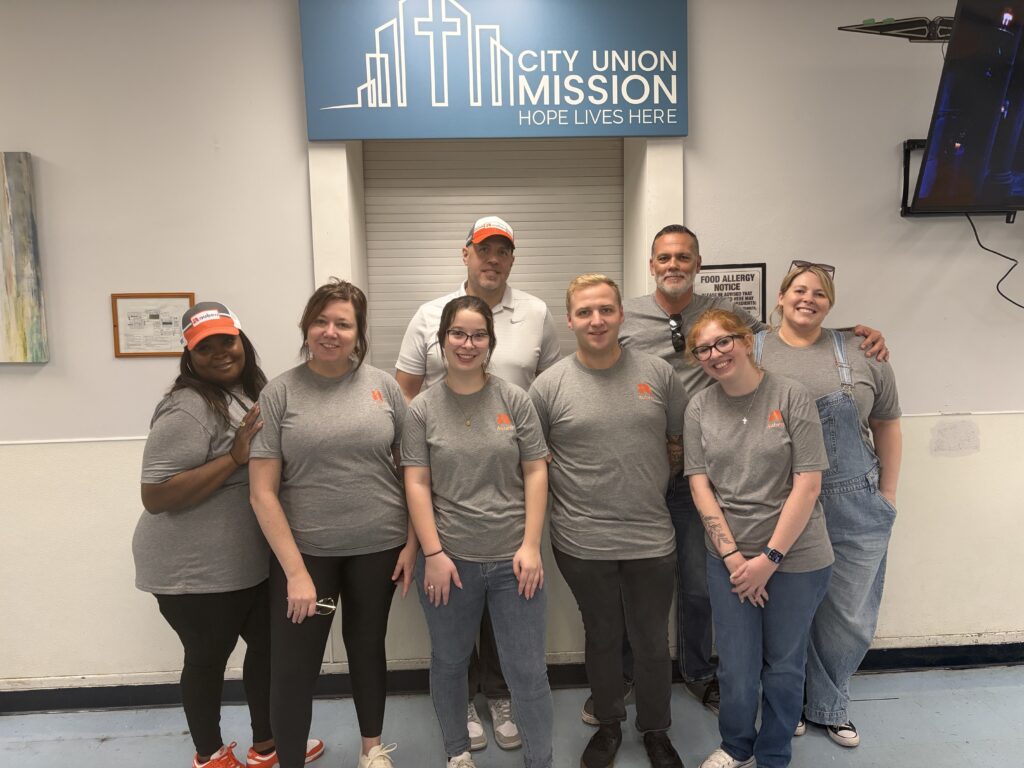
Auben’s Do Good Day 

Giving Back Across the Southeast

Do Good Day began as something simple—a small-town real estate company trying to make an impact in the community, while honoring the life of a loved one. It was born out of grief, at a time when there were no words to fully express the loss of someone taken too soon. 

But from that grief, something powerful emerged. 

What started as a small act of service has grown into a company-wide movement—one that continues to make a lasting impact on the communities around us. With over 50 participants across multiple markets, we don’t just improve neighborhoods—we strengthen people, relationships, and the purpose behind what we do every day. 

Last Friday, Auben Realty employees across the Southeast closed their laptops, paused the phones and emails, and stepped away from their daily responsibilities to give back. We set out with a shared goal: to make a difference in a way that was both meaningful and purposeful. 

Some of us picked up trash along city streets. Others served at animal shelters or volunteered in local schools. Each act, big or small, contributed to something greater than ourselves. 

Do Good Day is a twice-a-year event that honors the life of our founder, Tyson Schuetze’s sister, Laura Schuetze. Laura lived a life centered on caring for others, and through this day, we carry that same spirit forward. 

Below are reflections from our team—sharing how they spent Do Good Day and the impact it had on them and the communities they served. 

Because through service, we don’t just honor a legacy – we continue it.  

On Do Good Day, our DFW team volunteered at the Bedford Animal Shelter, where we helped with cleaning, organizing supplies, and spending time with the animals to give them attention and comfort. The experience was especially meaningful because it gave us a chance to directly support animals in need and assist a local shelter that relies heavily on community involvement. Being able to see the impact of small actions- like providing care, cleanliness, and companionship, give love to animals in need was very rewarding. Having a day dedicated to serving our community was a great reminder of the importance of giving back and working together beyond our day-to-day responsibilities.” – Klaudia Zmurko, Dallas/Ft Worth 

On Do Good Day, the Augusta team came together to make a visible impact in a historic neighborhood, cleaning up, giving back, and taking pride in the community we serve. 

Beyond the work itself, it strengthened our team. We built camaraderie, had real conversations, and connected outside of our day-to-day roles, reinforcing what makes our team strong. 

I believe deeply in giving back at any level. I was raised on the idea that “If we all do a little, no one has to do a lot.” – Martin Williams, Augusta 

What I did on Do Good Day and What it meant: 
I spent the day volunteering at a Title I elementary school, working in a second-grade classroom. I helped the teacher with classroom activities, worked one-on-one with students, and supported wherever I was needed throughout the day. 

Having a day like Do Good Day built into our company culture says a lot. While we focus on providing housing and creating communities every day, it was meaningful to step into a different role and support local kids. Do Good Day really puts into perspective how all of it connects back to building stronger communities overall. It was meaningful to be able to give back in a different, more hands-on way.” – Taylor Moore, Jacksonville 

On Do Good Day, we spent time picking up trash throughout the community to help create a cleaner and more welcoming environment for everyone. 

The experience was meaningful because it gave us the opportunity to give back and make a visible difference. It was rewarding to see the immediate impact of our efforts and to know that even small actions can positively affect others. 

Having a day dedicated to serving the community was important because it brought people together with a shared purpose. It highlighted the value of giving back and supporting the communities we serve, while encouraging continued involvement and acts of service beyond just one day.” – Alexis Jenkins, Augusta  

The Atlanta Exurb Home Buying Discount is Disappearing

Remote work and limited supply are reshaping Atlanta’s real estate. Learn more about Atlanta exurb home buying in our latest blog post from Blake Collier!

_______________________________________________________________________________________________________

The narrowing price gap between Atlanta’s exurbs and its urban core reflects a broader shift in how Americans value space, flexibility, and overall lifestyle. As remote and hybrid work arrangements persist, proximity to downtown offices is no longer a dominant economic factor or reality that it once was. Buyers are prioritizing more square footage, newer construction in a lot of cases, perceived quality-of-life improvements, and amenities that exurban areas often deliver more readily than dense city centers.  Over the last decade, Atlanta exurbs have rapidly developed and created their own “town squares”, increased their walkability scores to shops, restaurants, breweries, parks, family green spaces, live music venues etc.  Towns like Rowsell, Alpharetta, Milton, Woodstock, Peachtree Corners, Dunwoody, and Cumming, just to name a few, are perfect examples of this development trend that has been a main driver of population growth outside Atlanta’s city core.  Additionally, limited housing supply in these new, desirable fringe communities have accelerated home prices upward, faster than in the city itself.

If exurban prices do surpass those of the core, it could signal a structural change rather than a temporary anomaly. Developers may respond by increasing supply in outer-ring markets, but infrastructure, zoning, and land-use constraints could limit how quickly that supply comes online. Meanwhile, first-time buyers who once relied on exurbs as an affordable entry point may find themselves priced out, shifting demand even farther outward or into smaller, less competitive metros.

Looking ahead, Atlanta could become a case study for other fast-growing regions. While most major metros still maintain a significant pricing discount in exurbs, the same forces, migration patterns, remote work, and housing shortages are present nationwide. If those trends continue, Atlanta’s experience may foreshadow a future where the traditional urban-to-exurban price hierarchy becomes far less predictable. 


Join the Auben Realty Community!

Get the best real estate news from Auben Realty.

Alt


What Atlanta Rental Owners Really Want From a Property Manager

Most Atlanta rental owners don’t wake up thinking, “I need a property manager.” They wake up thinking, “I need my rent on time, I don’t want 2 a.m. phone calls, and I don’t want my property to fall apart.” The problem is that a lot of management companies talk about processes and software while owners are worrying about risk, time, and returns.
 
From the conversations we have every week, Atlanta owners tend to care about five things:
  1. Reliable rent collection and minimal vacancy
  2. Quality residents who respect the home
  3. Clear communication and honest expectations
  4. Proactive maintenance instead of expensive surprises
  5. Straightforward fees that don’t feel like “gotchas”
 
At Auben Realty, we build our management around those priorities. Our screening process is designed to place residents who can pay on time and take care of the property, not just fill a vacancy. We use consistent, transparent criteria and look at the full picture so you’re not guessing who is living in your asset.
 
On the communication side, you get regular updates, clear reporting, and a defined point of contact—so you’re never wondering who to call when you have a question. Maintenance requests are tracked, prioritized, and handled with vetted vendors, and we work hard to catch issues early during inspections and resident communication so small problems don’t become big ones.
 
Fee structures are laid out clearly up front so you know exactly what you’re paying for and why. Our goal is that you feel comfortable handing us the keys and confident that we’re working to protect your time, your cash flow, and your long‑term equity.
 
If you’ve been managing your own property or you’re not fully satisfied with your current manager, let’s talk through your situation. We can quickly outline how Auben would handle your property differently and what that could mean for your results over the next 12 months.

Join the Auben Realty Community!

Get the best real estate news from Auben Realty.

Alt