Protect Your Refinance Exit: BRRRR and IRS Essentials for U.S. Investors
October 2, 2026
BRRRR stands for Buy, Rehab, Rent, Refinance, Repeat, a capital-recycling strategy that lets investors convert one property into the funding for the next when rehab and refinance go to plan. It suits investors with access to renovation capital, contractor relationships, and a realistic refinance exit. The main risks are rehab overruns, refinance seasoning delays, and the temporary cash tied up between purchase and payoff.
TL;DR:
- BRRRR deals are highly sensitive to rehab overruns, refinancing delays, and the property’s appraisal coming in lower than the projected after-repair value.
- Successful deals require buying undervalued properties with a wide margin between purchase price and ARV, especially in stable or growing neighborhoods.
- Proper underwriting involves a strict 70% rule based on ARV minus repair costs, along with thorough due diligence on property condition and local rental demand.
- Refinance seasoning rules and lender requirements for lease signing and documentation are critical factors that influence timely capital recovery.
- Running conservative stress tests that account for higher rehab costs, longer vacancy, and lower ARV helps identify deals with real profit margins.
Table of Contents
- How to find and underwrite BRRRR-appropriate deals
- Rehab: budgeting, contractors, and keeping scope under control
- Rent: getting to a signed lease the refinance will accept
- Refinance: recovering your capital without the appraisal surprise
- Repeat and scale: turning one cycle into a portfolio
- Why some BRRRR deals fail and how to stress-test yours
- Tax and accounting essentials for BRRRR investors
- How a full-service manager supports BRRRR investors
- Running your BRRRR cycles with support from Auben Realty
- Sources
- FAQ
How to find and underwrite BRRRR-appropriate deals
The buy phase decides whether the entire cycle works. You want distressed or undervalued properties where the gap between purchase price and after-repair value (ARV) is wide enough to cover rehab costs, financing costs, and still leave equity on the table. Neighborhood fundamentals matter as much as the house itself: stable or growing rent demand, low vacancy, and a realistic buyer or appraiser pool for comparables.
Most investors underwrite with a version of the 70% rule: offer no more than 70% of ARV minus repair costs. It is a screening tool, not a guarantee, since financing costs, closing costs, and holding costs also eat into margin. Pair it with projected post-rehab rent and cap rate to confirm the deal cash flows once it is refinanced, not just once it is rented.
Financing at purchase shapes your exit. Cash and hard-money loans give you speed and negotiating power on distressed properties, while bridge loans can fund both purchase and rehab in one draw structure. Whichever you choose, know your refinance lender’s seasoning rules before you close, since that timeline determines how long you are carrying short-term financing costs.
Before making an offer, run through a due diligence checklist:
- Pull a title search to confirm there are no liens or ownership disputes.
- Get a full property inspection, including roof, foundation, and major systems.
- Verify permit history for any prior additions or conversions.
- Check at least three to five recent comparable sales for ARV accuracy.
- Research local rental demand through vacancy rates and comparable listings.
A free rental analysis can help confirm rent expectations and tenant demand before you commit capital to a deal.
Rehab: budgeting, contractors, and keeping scope under control
Not every renovation dollar moves ARV or rent equally. Kitchens, bathrooms, and major mechanical systems (HVAC, electrical, plumbing) tend to drive the most value per dollar spent, followed by curb appeal items like paint, landscaping, and entry doors. Cosmetic upgrades beyond that point often cost more than they return.
Build your rehab budget in four parts: hard costs (materials and labor), soft costs (permits, design, inspections), a contingency reserve, and financing or holding costs for the rehab period.
Vet contractors on past work, licensing, and insurance, then lock in a fixed-bid scope of work rather than open-ended time and materials. Structure payment as a draw schedule tied to completed milestones, and require signed lien waivers at each draw to protect your title.
- Get at least three competing bids before awarding the rehab contract.
- Put the scope of work in writing, including materials, brands, and finish levels.
- Require lien waivers with every draw payment.
- Build a punch list before the final draw releases.
Pro Tip: Walk the property with your contractor before writing the scope of work. Verbal assumptions are the most common source of change orders.
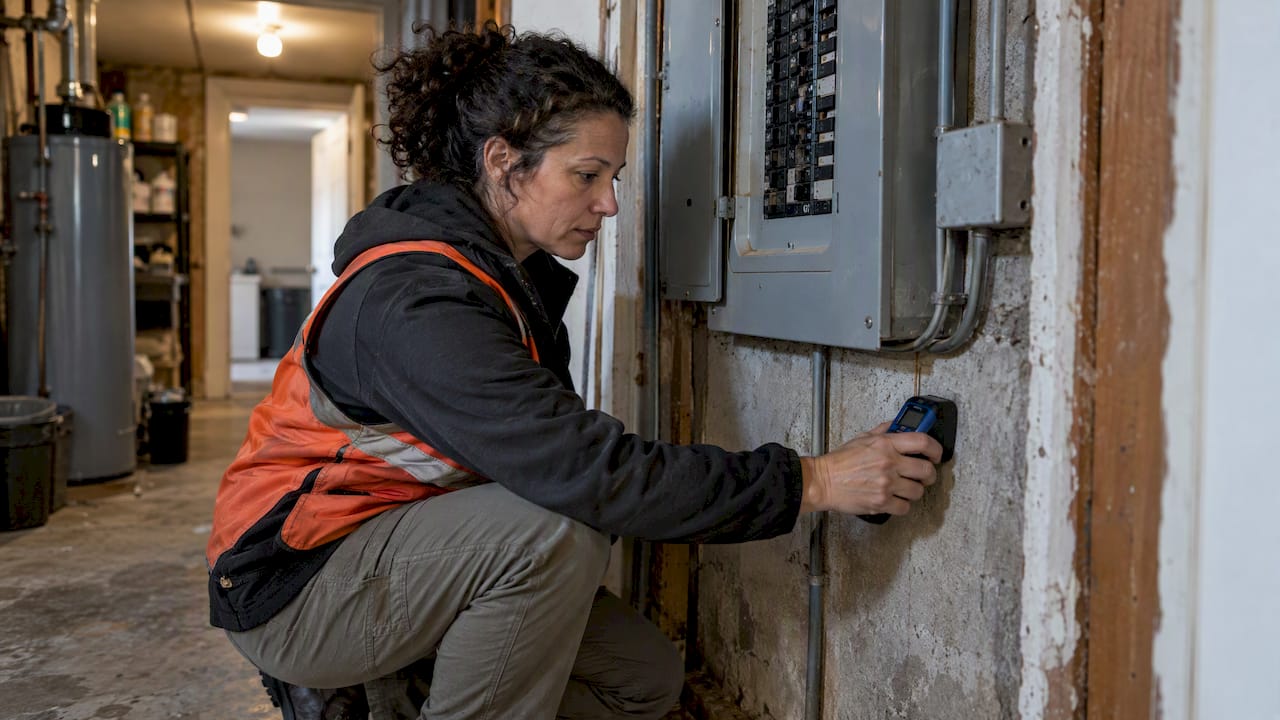
Surprises tend to hide behind walls and under floors. A short pre-rehab checklist covering sewer scope, electrical panel capacity, and moisture readings can catch expensive issues before they become mid-project change orders. Our best renovations guide breaks down which upgrades reliably pay off in rent and resale value.
Rent: getting to a signed lease the refinance will accept
Stabilization is where BRRRR deals either support a strong appraisal or stall. Lenders want to see occupied, cash-flowing property with documentation to prove it, so pricing and screening speed both matter.
- Set rent using at least three current comparable listings in the immediate area, not citywide averages, and build in a modest vacancy assumption.
- Screen tenants on income, credit, rental history, and background checks, and use lease clauses lenders commonly expect, like clear term length and renewal terms.
- Time the lease signing with your refinance seasoning window in mind. Some lenders require a signed lease in place before underwriting will proceed.
- Assemble a documentation pack as you go: the signed lease, dated photos of the finished unit, and paid rehab invoices.
Having this pack ready before you apply shortens the refinance timeline considerably.
Refinance: recovering your capital without the appraisal surprise
The refinance is the step that actually returns your cash, and it is also where most BRRRR plans break down. Investors generally choose between DSCR (debt-service coverage ratio) loans, conventional investment mortgages, portfolio lender products, or paying off a hard-money bridge loan with a longer-term refinance. Each path treats seasoning and documentation differently, so the right choice depends on how fast you need capital out and how the property qualifies.
- DSCR loans qualify primarily on the property’s rental income rather than your personal income, and many DSCR lenders require only 3 to 6 months of seasoning, according to a refinance guide for investment property.
- Conventional cash-out refinances, including those following Fannie Mae’s cash-out guidelines, commonly require the existing mortgage to be at least 12 months old along with borrower-on-title requirements and maximum loan-to-value limits.
- Freddie Mac’s cash-out refinance guidance similarly sets LTV and debt-coverage underwriting constraints that determine how much of the appraised value a lender will actually lend against.
Seasoning windows vary by lender and product, typically running from 3 to 6 months for many DSCR programs up to 12 months for conventional cash-out refinancing, a gap that can determine whether your capital comes back in time to fund the next deal, per the refinance guide for investment property.
Appraisal risk is the other major variable. Use a conservative ARV estimate going in, request a pre-appraisal consultation when the lender offers one, and keep your comparable selections tight to similar square footage, age, and finish level in the immediate area.
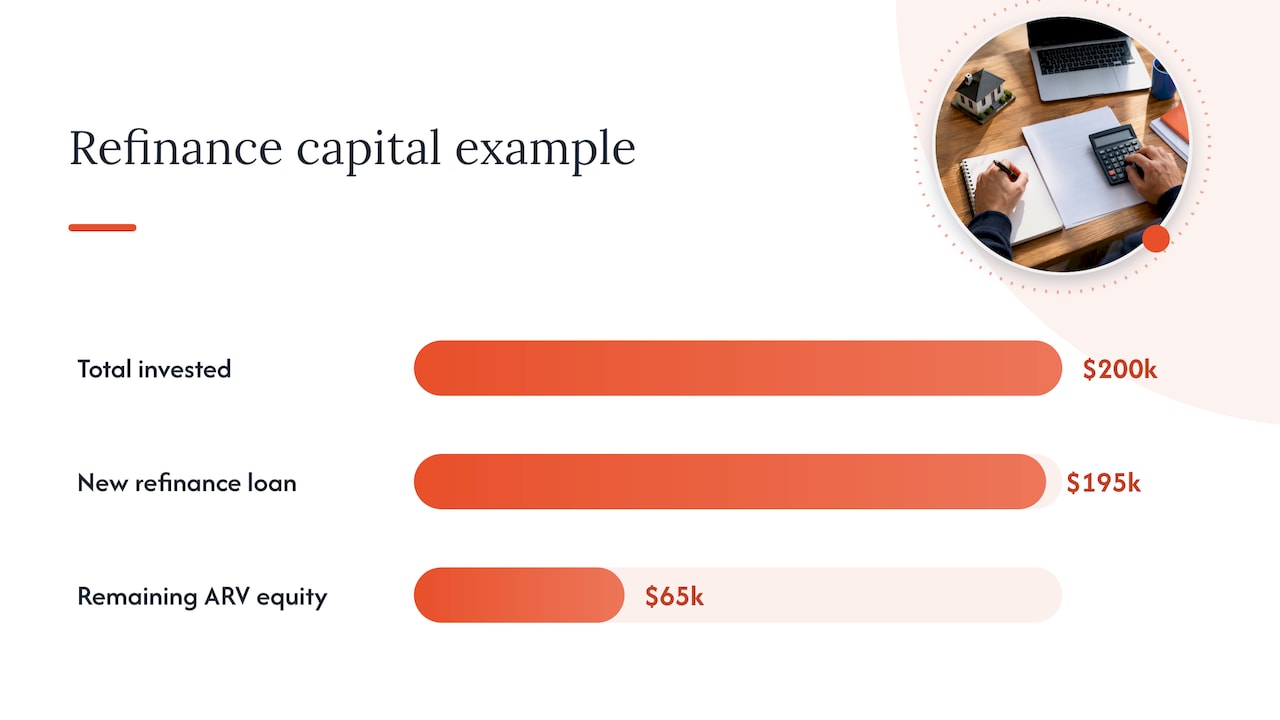
A worked example: say you buy a property for $150,000 and spend $50,000 on rehab, for $200,000 total invested. If the ARV comes in at $260,000 and your lender allows 75% LTV on the refinance, the new loan size is $195,000. After paying off the original purchase and rehab financing, you recover a meaningful share of your invested capital, though the exact amount depends on your original financing terms.
Before applying, prepare the appraisal order, signed lease, paid repair invoices, and before-and-after photos. Lenders and appraisers move faster with a complete file.
Repeat and scale: turning one cycle into a portfolio
Each completed cycle frees up capital for the next purchase, so the math worth tracking is how much cash you recover per deal and how many cycles your available capital can fund in a year. That pace depends on refinance speed, rehab timelines, and how much reserve you keep on hand.
- Keep cash reserves per property rather than deploying every dollar recovered into the next deal.
- Set a maximum leverage rule, such as never exceeding a fixed LTV across your portfolio, to avoid overexposure if rents soften.
- Diversify across neighborhoods and tenant types rather than concentrating risk in one submarket.
- Decide early whether you will self-manage renovations and leasing or hand them to a project manager as your unit count grows.
Bookkeeping, a vendor panel, and a simple dashboard tracking rent, expenses, and loan balances per property become necessary once you pass a handful of units, since spreadsheets alone stop scaling.
Why some BRRRR deals fail and how to stress-test yours
The biggest misconception is that you always get your full capital back at refinance. Appraisals, lender LTV limits, and rehab overruns routinely reduce that number, sometimes leaving cash permanently in the deal.
- Appraisal shortfalls happen when the appraiser’s comparables come in below your projected ARV.
- Cost overruns during rehab shrink the equity cushion you were counting on.
- Refinance denial can occur if DSCR or income qualification falls short of lender thresholds.
- Tenant turnover or vacancy right before refinance can weaken the income documentation lenders want.
Run a quick stress test before you buy: use a conservative ARV instead of your best case, add 20% to your rehab budget, and assume 6 to 9 months of vacancy or holding costs. If the deal still works under those assumptions, it has real margin.
Tax and accounting essentials for BRRRR investors
Depreciation materially affects your return and your tax bill. The IRS requires residential rental property placed in service after 1986 to use MACRS, depreciated on a straight-line basis over 27.5 years with a mid-month convention, according to IRS Publication 527. Rehab costs that count as capital improvements add to your depreciable basis rather than deducting immediately.
Residential rental property is depreciated using the straight-line method over a multi-decade recovery period, applying the mid-month convention in the month the property is placed in service.
Rental income and expenses are reported on Form 1040 Schedule E, and most individual investors use the cash method, deducting expenses in the year paid. Keep repairs separate from improvements in your records: a patched roof section is typically deductible immediately, while a full roof replacement is capitalized and depreciated, a distinction that matters at tax time and if the IRS ever reviews your filings. Investors who plan to accelerate depreciation on qualifying rehab components sometimes look into cost segregation strategies with a tax professional.
How a full-service manager supports BRRRR investors
Auben Realty has significant experience working with property owners and investors across multiple regional markets. Renovation oversight, vendor selection, and tenant placement are the points where BRRRR cycles most often slip, and having a team handle scope control, contractor coordination, and lease-up directly addresses those failure points.
— MediaBeast
Running your BRRRR cycles with support from Auben Realty

Rehab overruns and slow lease-ups are the two things most likely to stall your refinance timeline, and that is exactly where a dedicated team pays for itself. Services offered may include project management for renovation oversight and vendor coordination, tenant placement and leasing, and asset management support for investors managing multiple properties.
If you would rather hand off renovation oversight and ongoing property management than run every cycle yourself, see Auben Realty’s property management services to get started.
This article is general information, not a substitute for advice from a qualified financial advisor. Consult a qualified financial professional about your own circumstances before acting on anything here.
Sources
- Publication 527 (2025), Residential Rental Property | Internal Revenue Service
- Mortgage Refinance for Investment Property Guide | RefiGuide
- Cash-Out Refinance Transactions | Fannie Mae
- Cash-out Refinance – Freddie Mac Single-Family
FAQ
What is the 70% rule for BRRRR?
The 70% rule says investors should pay no more than 70% of the after-repair value minus estimated repair costs. It is a quick screening tool to keep enough margin for financing costs and profit, not a guarantee of returns.
What is the 3-3-3 rule in real estate?
Definitions of the 3-3-3 rule vary and there is no single, widely recognized standard behind it. Treat any version you encounter as a rough guideline rather than an industry rule, and underwrite each deal on its own numbers instead.
Does the BRRRR method really work?
BRRRR can work when rehab stays on budget, the property appraises at or near the projected ARV, and the refinance loan meets lender seasoning and LTV requirements. It fails most often when rehab overruns or the refinance appraisal comes in lower than expected, so conservative underwriting upfront matters more than optimism.
How much money do you need to BRRRR?
You need enough cash or financing to cover the purchase, the full rehab budget plus a contingency, and holding costs until the property is rented and refinanced. The exact amount depends on the deal, but the refinance is designed to return a share of that capital once the property is stabilized and appraised, per Fannie Mae’s cash-out guidelines.