Charleston Rental Market in 2026: Rents, Occupancy and Outlook
November 5, 2026
Charleston, South Carolina is a high-rent, high-occupancy market that has cooled from its post-pandemic peak but not weakened. In Q3 2026, average rent was $1,805 with 93.0% occupancy and 3.0% annual rent growth, according to MMG Real Estate Advisors. If you live or invest in Houston and are looking at the Lowcountry, this guide covers what the numbers mean, what drives them, what to budget for and which rules apply.
TL;DR
- Charleston’s apartment market is stable: roughly 93% occupancy and low-single-digit rent growth in Q3 2026.
- Figures differ by source and method. Averages run from about $1,800 to above $2,100 depending on what is counted.
- New construction starts have dropped sharply, which supports rents. Coastal insurance is the big cost variable for owners.
- Short-term rental rules in Charleston County are zone-based, capped by days and require annual permits, so long-term leasing is the simpler path.
- Out-of-state owners, including Houston investors, do best with local management on the ground.
Table of Contents
- Where Charleston rents stand right now
- What is driving demand and supply
- Renter leverage and concessions
- How rents vary by property type and neighborhood
- What it costs to own a Charleston rental
- Rules that shape long-term and short-term rentals
- Should a Houston owner or investor look at Charleston?
- Our perspective
- Work with Auben in Charleston
- FAQ
- Sources
Where Charleston rents stand right now
The most recent quarterly data comes from MMG Real Estate Advisors. Its Q3 2026 report puts average rent at $1,805, occupancy at 93.0% and annual rent change at 3.0%. Demand stayed strong, with absorption above pre-pandemic levels, though rent growth and occupancy eased slightly from the second quarter.
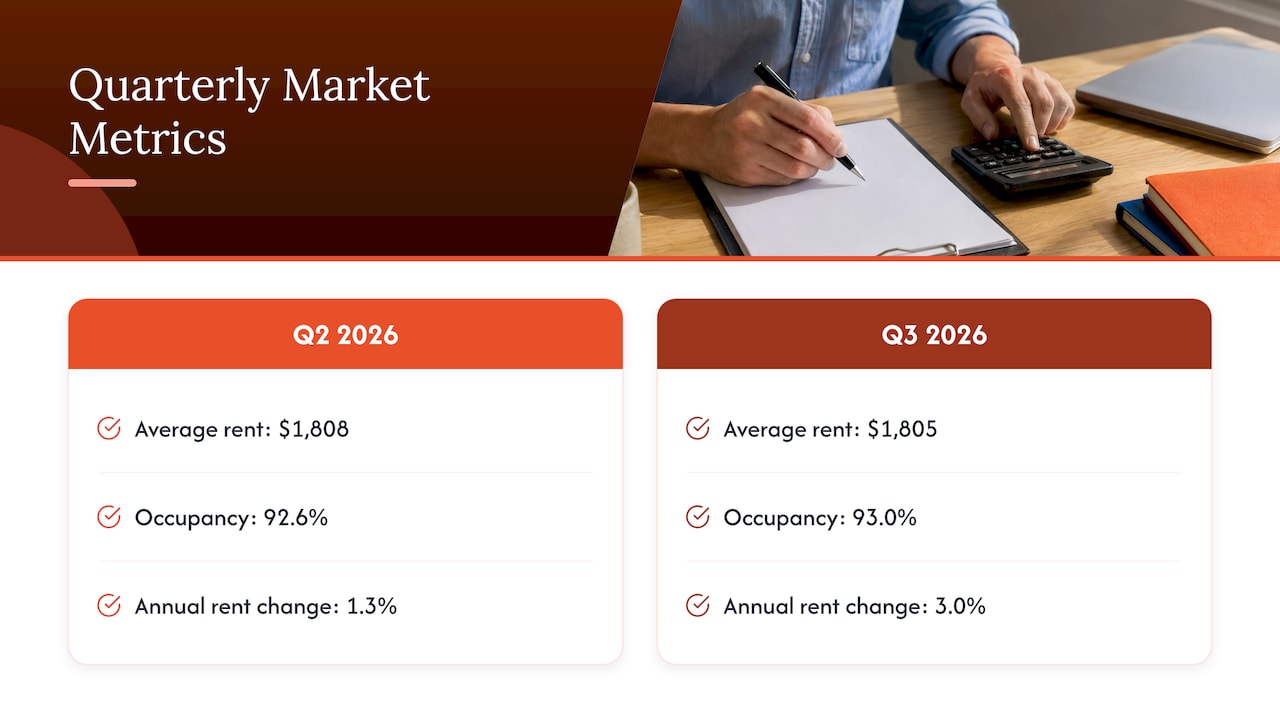
The quarter before looked similar. In Q2 2026, average rent was $1,808 and occupancy 92.6%, with net absorption of 3,918 units over the trailing four quarters and annual rent growth of 1.3%. So the market has moved sideways on rent while occupancy ticked up. That is what a balanced market looks like.
Earlier in the year, multifamily vacancy was around 9.2% in Q1 2026, according to CBC Atlantic, with steady absorption supporting occupancy. The analysts describe a market moving into a more balanced phase after several years of rapid growth, where higher interest rates call for more conservative underwriting.
Why you will see different rent numbers
Readers often find two Charleston “average rents” that are hundreds of dollars apart and assume one is wrong. Usually both are right for what they measure.
| Source | What it reports | Figure |
|---|---|---|
| MMG Real Estate Advisors | Multifamily average rent, Q3 2026 | $1,805 |
| Select Commercial | Average asking rent, August 2026 | $2,137 |
| RentCafe | Average apartment rent, 2026 | $2,175 |
MMG tracks the multifamily market broadly, including older, lower-priced stock. Asking-rent figures lean toward newer listings that are advertised right now. RentCafe also reports that studios average $2,145 and one-bedrooms $1,947, up 3.94% from $2,092 a year earlier. Use the lower numbers to judge what a stabilized building collects, and the higher ones to judge what a new lease costs today.
Select Commercial adds that Charleston is the most expensive apartment market in South Carolina by a wide margin, with August 2026 asking rents up 1.55% over the year. It credits the port, manufacturing, tourism and a historic peninsula with limited room to build.
What is driving demand and supply
Charleston rents did not get here by accident. The Post and Courier reported in November 2026 that rents have risen about 30% since before the pandemic, driven by population growth and limited housing supply, with new and longtime residents competing for the same space.
Three forces matter most for an owner.
- Employment anchors. The port, manufacturing and tourism give the market several sources of renter demand rather than one.
- Constrained land. Geography and preservation rules on the peninsula limit what can be built where demand is strongest.
- A slowing pipeline. MMG reports that apartment starts in Q2 2026 were down nearly 50% from a year earlier, and calls Charleston one of the stronger Southeast performers because new supply is slowing while renter demand holds.
That last point is the one to watch. Fewer starts today means fewer deliveries later, which tends to support occupancy and rents for existing properties. It also changes what owners do with the buildings they already have. Keeping units competitive with newer product is a matter of steady upgrades and quick, clean turns between residents, and apartment turnover services are one way multi-unit owners keep vacant days short.
One caution from the other direction: some analysts say investors should underwrite conservatively given the volume of new supply still entering the market. Units delivered in the last two years are still leasing up, and they set the competitive ceiling for older stock.
Renter leverage and concessions
Stable averages hide a more negotiable street-level reality. Rental Beast data for Q1 2026 indicated that nearly two in three active Charleston listings offered concessions, such as free rent or waived fees. Concessions are how landlords hold the headline rent steady while still filling units.
For an owner, this has practical consequences:
- Price your listing against effective rent (rent minus concessions), not only the advertised number.
- A well-presented, correctly priced home leases faster than one that waits for a rent bump.
- Offering a modest incentive can protect a rent level that matters for refinancing or valuation.
How rents vary by property type and neighborhood
City-wide averages are a starting point, not a pricing tool. Within Charleston, the same dollar buys very different homes. Peninsula and nearby historic districts carry a premium because supply there cannot expand easily. Suburban and surrounding submarkets offer larger floor plans, yards and newer construction at lower rents per square foot.
The unit-size split in the figures above shows the shape: RentCafe’s studio and one-bedroom averages are both well above the MMG market-wide average, which tells you that newer, well-located buildings are pulling the top of the range. For a specific street or building, compare recent leases for the same bedroom count, age and amenities within a mile or two, rather than relying on any citywide figure.
Single-family rentals follow their own logic. Families who want space and a school zone often choose a house over an apartment and stay longer, which lowers turnover. You can see what is currently on offer through Charleston, SC homes for rent, and our article on turning houses for rent in Charleston into investment opportunities walks through how that segment pencils out.
What it costs to own a Charleston rental
Rent is only the top line. Charleston’s operating statement has a few lines that differ from what a Houston owner may be used to.
Insurance
Being near the coast changes insurance. Select Commercial notes that coastal insurance is often the single largest variable in a Charleston operating statement. Wind and hail coverage is priced for the coast, and flood coverage is typically a separate policy. Houston owners who have dealt with Gulf Coast storm exposure will recognize the pattern. Get actual quotes for the specific address before you set a purchase price, because a low insurance assumption can distort your returns and your financing.
Property taxes
South Carolina treats owner-occupied and investment property differently. Industry summaries state that owner-occupied homes are assessed at 4% while investment properties are assessed at 6%. Confirm the current assessment and millage for the parcel with the county assessor before you finalize a budget, since the rate you inherit as an investor is the higher one.
Maintenance and turnover
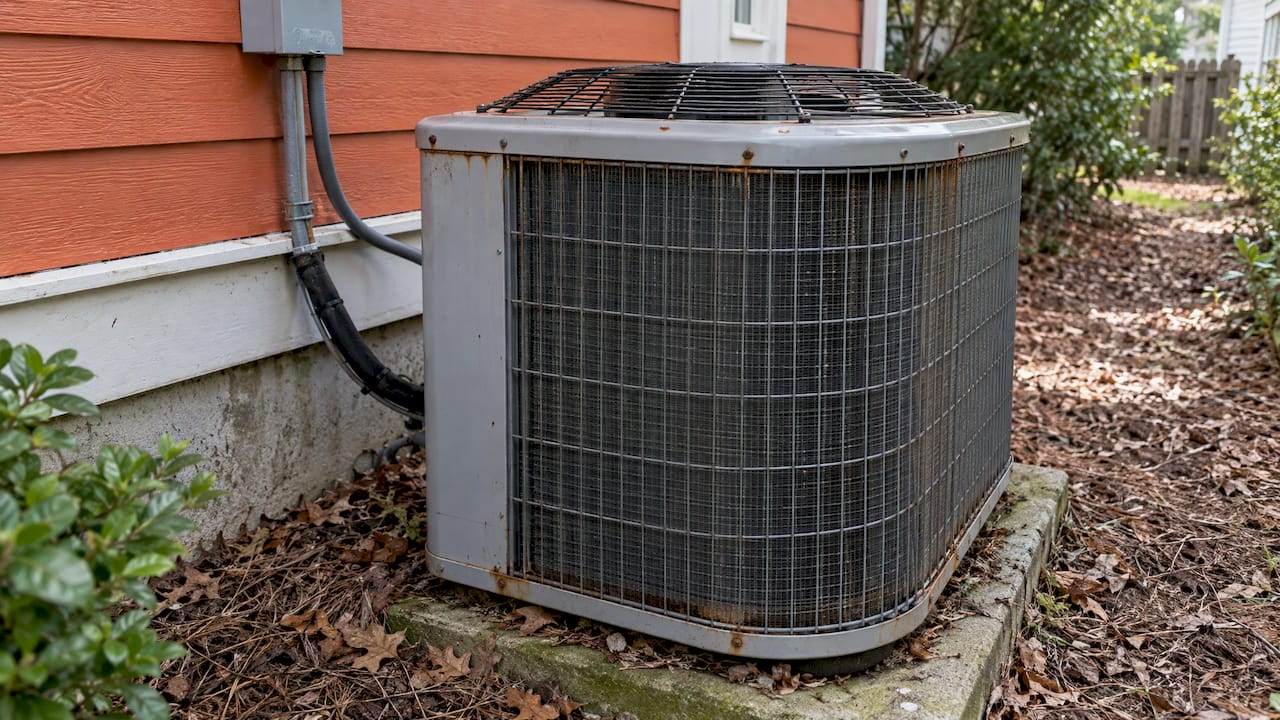
Humidity, salt air and summer storms are hard on roofs, exteriors and HVAC systems. Budget for preventive maintenance and keep a vendor bench you trust. Our approach is built on in-house maintenance and transparent vendor selection, so repair costs and scope are clear to owners rather than hidden in a markup. If you are weighing a renovation before leasing, our project management service oversees the scope, schedule and contractors for you.
Management and leasing
Professional management costs money, but vacancy and tenant problems cost more. We can walk through fee structures for your specific property type, since fees depend on the property and service level. Our guide to finding tenants for rental homes in Charleston explains the leasing process in detail.
Rules that shape long-term and short-term rentals
Long-term rentals
Long-term leases in Charleston fall under South Carolina’s landlord-tenant law. It covers things like how security deposits are handled and returned, what must be disclosed in the lease and how notices work. Read the state’s residential landlord and tenant statute, or have a local property manager apply it for you, before you write or sign a lease. A lease that follows the state requirements from day one avoids most disputes later.
Short-term rentals
Short-term rentals are a different animal. Charleston County Ordinance #2387, adopted April 28, 2026, sets day caps and permit requirements by zoning district:
| Category | Annual day limit | Zones listed in the ordinance |
|---|---|---|
| LHR | 72 days per calendar year | RM, AG-15, AG-10, AG-8, MHS, UR |
| EHR | 144 days per calendar year | AGR, RR, S-3, R-4, MHS |
| CGH | No day limit | RO, GO, NC, RC, CC |
All categories require an annual zoning permit renewal and a business license. Note that this is a county ordinance, and the City of Charleston and neighboring towns have their own rules, so check which jurisdiction your property sits in. For most owners who want predictable income, a long-term lease avoids the day caps and the renewal cycle entirely.
Should a Houston owner or investor look at Charleston?
The two cities behave differently, and that is the case for owning in both. Charleston is a smaller, supply-constrained coastal market with premium rents and persistent demand. Houston is a large, sprawling market with a different cost structure. Holding assets in more than one metro spreads local risk, and Charleston’s tight land supply and slowing construction pipeline give it a different cycle from a big-metro market.
What works across both:
- Underwrite conservatively. Use effective rents, real insurance quotes and a vacancy cushion.
- Match the strategy to the asset. Single-family, multifamily and build-to-rent each have their own tenant profile and expense pattern.
- Hire for presence. Remote ownership works when someone local handles showings, inspections, maintenance and resident relations.
- Know your exit. If a sale is on your horizon, our brokerage services cover acquisition and disposition.
Our perspective
We manage rental homes and multifamily assets across 10 regional markets, Charleston and Houston among them, and the lesson that repeats is that averages do not pay your mortgage. Effective rent, days vacant and the true cost of operating a coastal property do.
Charleston rewards owners who treat leasing as a process. The market is stable, but concessions are common, and a home that is priced, photographed and shown well fills faster than one that is simply listed. That is why we organize our teams in pods: a focused group handles your property day to day, so the people who know your tenants and your vendors are the same people you talk to.
We also believe in keeping maintenance close. Our in-house maintenance team and transparent vendor selection keep costs visible and turns quick, and proactive resident retention reduces the vacancy that quietly erodes returns. For investors, we pair local market knowledge with investor-focused strategy, so the property is managed for long-term value and not only this month’s rent.
If you own in Houston and are looking east, you do not have to give up control to gain a second market. You need a partner on the ground who reports clearly and acts quickly.
MediaBeast
Work with Auben in Charleston
We have more than 15 years of experience and have served 2,700 properties. If you own or plan to buy a rental in Charleston, our property management team handles leasing, tenant placement, maintenance and day-to-day operations so you can stay hands-off. Investors building a portfolio can talk to us about asset management and multifamily and build-to-rent services.

Tell us about your property or your investment goals through our website, and we will start with the market, the numbers and a plan that fits.
FAQ
What is the average rent in Charleston, SC?
It depends on the source. MMG Real Estate Advisors reported $1,805 for the multifamily market in Q3 2026, while asking-rent trackers such as RentCafe report $2,175 for 2026. The gap reflects what each one counts. Use the lower figure for overall market performance and the higher one for newly advertised units.
Is the Charleston rental market strong for landlords?
Yes, with realistic expectations. Occupancy was 93.0% in Q3 2026 and rent growth was 3.0%, and new construction starts have fallen sharply. Concessions are common, so price to effective rent and keep homes well maintained to lease quickly.
Can I run a short-term rental in Charleston?
Only within the limits of the zoning district and jurisdiction. Charleston County’s Ordinance #2387 sets day caps of 72 or 144 days in some zones, none in others, and requires an annual zoning permit and business license. Check whether your address is in the county, the city or another town before you plan on it.
Can a Houston investor manage a Charleston rental remotely?
Yes, if a local manager handles leasing, inspections, maintenance and resident communication. Charleston-specific issues like coastal insurance, humidity-related upkeep and local rules are easier to manage with someone who works in the market every day. We serve both Houston and Charleston, so owners with properties in each can work with one team.
Sources
- Charleston Q3 2026 Market Report, MMG Real Estate Advisors
- Charleston Q2 2026 Market Report, MMG Real Estate Advisors
- Q1 2026 Multi-Family Market Report, CBC Atlantic
- Average Rent in Charleston, SC, RentCafe
- South Carolina Apartment Loan Rates, Select Commercial
- Rising seas, lack of housing push costs up in Charleston, The Post and Courier
- Charleston Rental Market Report Q1 2026, Rental Beast
- Best States to Buy Rental Property in 2026, Ridge Street Capital
- Charleston County Ordinance #2387
- Apartment and multi-unit turnover services