Green Upgrades for Rental Property That Pay Back
October 17, 2026
The green upgrades that work best in a rental are the ones that cut operating costs, survive tenant turnover and make the unit easier to lease: LED lighting, air sealing and insulation, efficient water fixtures, smart thermostats and well-tuned HVAC. Solar, new windows and full electrification can also pay off, but only when they fit your capital plan and your tax position. Here is how to rank projects, who benefits from each, and how to pay for the work in 2026.
TL;DR
- Start with data, not a shopping list. Benchmark utility use, then fix the cheapest, highest-impact items first: lighting, air sealing, water fixtures and HVAC controls.
- Do bigger work at turnover, refinance or acquisition. Whole-building upgrades are rarely cost-effective as one-off swaps.
- Most rental improvements are capitalized and depreciated, not deducted in year one. The federal home-energy credits 25C and 25D ended for 2026 spending.
- The split incentive (you buy, the tenant saves) is solvable with the right financing, lease terms and upgrade choices.
- A coordinated scope with one accountable manager beats a pile of unrelated vendor quotes.
Table of Contents
- Start with what the building actually uses
- The upgrades that usually earn their place
- Do the big work at the right moment
- How the money works in 2026
- Solving the split incentive
- What we have seen: a perspective on green upgrades
- A practical order of operations
- Where we can help
- FAQ
- Sources
Start with what the building actually uses
Most owners pick upgrades the way they pick paint colors: by what looks good in a listing. The more reliable approach is to measure first. EPA’s free ENERGY STAR Portfolio Manager lets owners track energy use and greenhouse gas emissions, and it normalizes results by climate zone and property type. That matters if you hold a house in Jacksonville Beach and a duplex in Kansas City: the same kilowatt-hours mean very different things in different climates.
Benchmarking tends to surface easy wins before you commit to anything large. Common area lighting, vacant-unit settings and HVAC controls are the usual suspects. For a single-family rental, the equivalent is a year of utility bills, from your own records if you pay them or from tenant authorization if they do, plus a walk-through of the house.
For multifamily, the research is clear about method. An ACEEE paper on systematic retrofit analysis in multifamily buildings argues that comprehensive, whole-building analysis finds savings that one-off equipment swaps miss. A widely used target for multifamily retrofits is a reduction of about 20% in energy use. Treat that as a planning benchmark, not a promise: results depend on the building, the climate and the work performed.
The upgrades that usually earn their place
The table ranks common measures by what an investor cares about: cost level, who sees the savings, and how well the upgrade holds up under tenant use. Cost levels are relative, because pricing varies by market and contractor.
| Upgrade | Relative cost | Who sees the savings | Durability with tenants | Best timing |
|---|---|---|---|---|
| LED lighting | Low | Tenant in units, owner in common areas | High | Any time |
| Air sealing and weatherstripping | Low | Tenant, plus comfort for both | High | Turnover |
| Attic insulation | Low to moderate | Tenant | Very high | Turnover or vacancy |
| Low-flow toilets, faucets, showerheads | Low to moderate | Owner if water is billed back or included, otherwise tenant | High | Turnover |
| Smart or programmable thermostats | Low | Tenant | Moderate (needs setup rules) | Turnover |
| High-efficiency HVAC or heat pump | High | Tenant, plus fewer failures for owner | High | Planned replacement |
| ENERGY STAR appliances | Moderate | Tenant | High | Replacement cycle |
| Drought-tolerant landscaping, drip irrigation | Low to moderate | Owner if you pay for irrigation | High | Spring or fall |
| Windows | High | Tenant | High | Deep retrofit only |
Lighting
LEDs are the standard first step for a reason. ENERGY STAR notes that the average American home has around 50 sockets, and about 60% of them still held inefficient bulbs at the time of that 2017 publication. The number has likely shifted since, but the point holds for rentals: tenants rarely replace bulbs they did not buy, so older units often still carry them. Buy ENERGY STAR certified bulbs and use one consistent color temperature in each unit. That makes replacements easy for maintenance and makes the home look finished in photos.
Envelope: air sealing and insulation
These are not glamorous, but they reduce the load on every other system. Sealing gaps around ducts, plumbing penetrations and attic hatches, then adding insulation, makes smaller HVAC equipment practical and cuts the complaints that come from uneven rooms. Tenants in Texas and Florida feel the cooling bill. Tenants in Kansas City feel both seasons. Because the work is hidden inside walls and attics, it also does not get damaged between leases.
Water
Fixtures that carry the EPA WaterSense label cut water use without changing how tenants live. This is where a rental owner should check who pays the bill. If water and sewer are billed to the tenant, savings go to them and the benefit to you is retention and fewer leak calls. If the owner pays, as in many multifamily buildings, savings land on your income statement. EPA’s Water Score for multifamily housing shows how many properties already track water in Portfolio Manager, and it is a useful way to see where you stand against similar buildings.
HVAC and controls
Heating and cooling is usually the largest energy cost in a home, so it is where the biggest savings sit and also where mistakes cost the most. Resist swapping a system early just because it is old. Instead, tune what you have: clean coils, correct refrigerant charge, seal ducts, and replace filters on a schedule. When a unit fails or nears the end of its life, replace it with a properly sized high-efficiency system. Our piece on CapEx planning for rentals explains why forecasting each component’s remaining life beats flat rules of thumb, and it is the right frame for deciding when HVAC moves from maintain to replace.
Appliances and smart devices
ENERGY STAR refrigerators, dishwashers and washers are easy to justify when you are replacing anyway. Smart thermostats help when tenants actually use them, so set them up before move-in and include a one-page guide in the welcome packet. Skip gadgets that need an app account tied to the owner, since they create support headaches at every turnover.
Landscaping
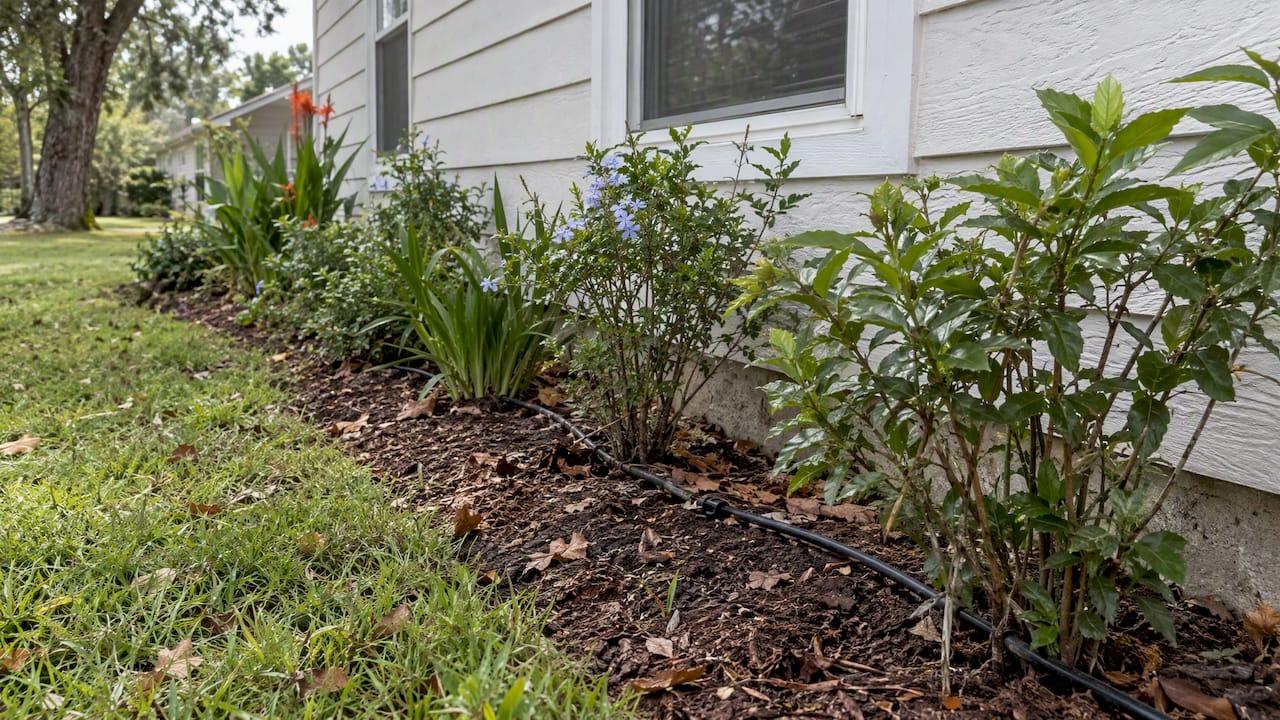
Native, drought-tolerant plants and drip irrigation lower water use and mowing time. In the Charleston, Jacksonville and Houston areas, heavy summer rain and heat make plant selection matter. Ask a local nursery or your county extension office which species suit your soil. Low-maintenance yards also reduce the odds of a code violation for an overgrown lawn.
Do the big work at the right moment
The most useful idea for investors is timing. Department of Energy research on tenant spaces describes repositioning periods, such as acquisition, refinancing or major turnover, as rare windows for deep retrofits. Replacing glazing or major mechanical systems in isolation rarely makes financial sense, but doing so while a unit is empty and a budget is already open changes the math.
In practice, three moments matter:
- Acquisition. Build the efficiency scope into your underwriting and renovation budget before closing. Our brokerage services team can help you evaluate a property with the upgrade list in mind.
- Turnover. An empty unit is the cheapest time to air seal, insulate, swap fixtures and replace bulbs. Keep the vacancy short by planning the scope before the tenant leaves.
- Refinance or sale. Lenders and buyers respond to documented operating costs. Records of upgrades and utility data support valuation.
If you are weighing which renovations matter most overall, our guide to the best renovations for your rental property puts efficiency work next to cosmetic work so you can budget both.
How the money works in 2026
Tax treatment
The IRS draws a line between repairs and improvements. According to Publication 527, you must capitalize any expense you pay to improve rental property, meaning work that results in a betterment, restores the property or adapts it to a new use. Capitalized costs are recovered over time through depreciation, reported on Form 4562 (see the Form 4562 instructions). Replacing a few failed bulbs or a broken faucet is a repair. Replacing the HVAC system or adding insulation across the attic is typically an improvement. Your CPA decides how a specific project is treated, so ask before the work, not at filing time.
The federal credits have changed
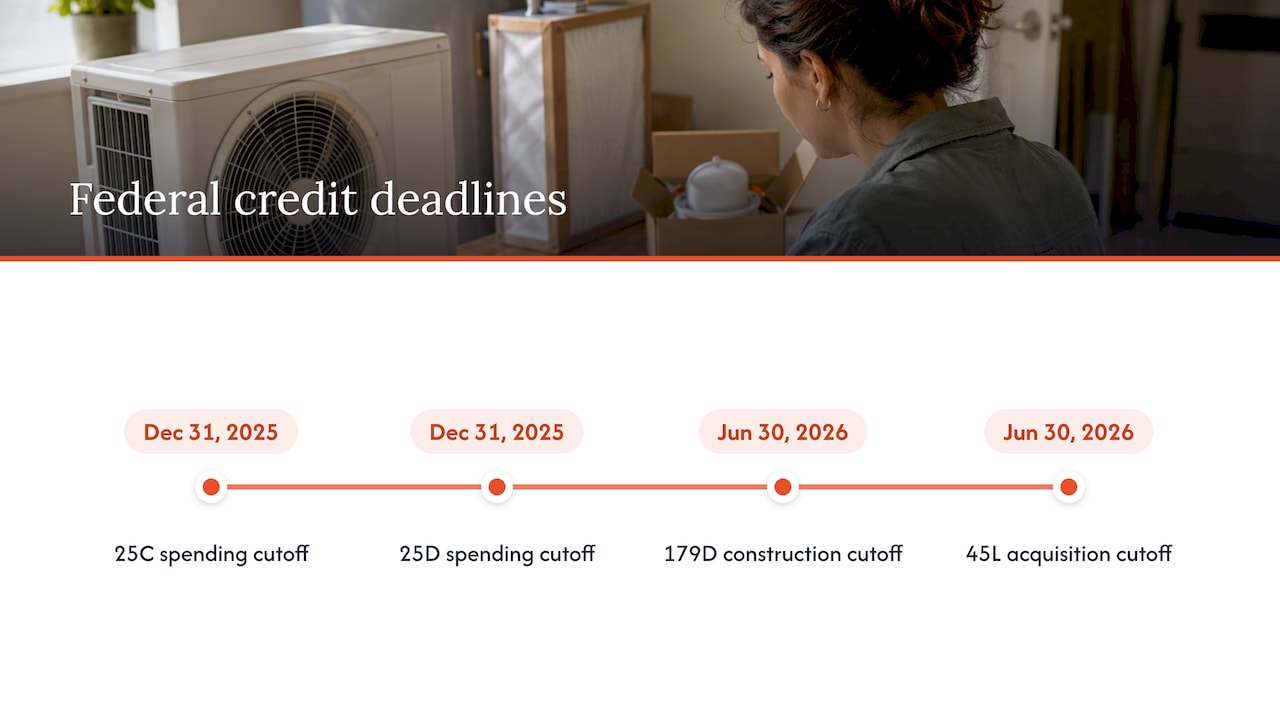
The federal tax landscape moved in 2025. According to the IRS FAQs on the One Big Beautiful Bill Act changes, the Energy Efficient Home Improvement Credit (25C) and Residential Clean Energy Credit (25D) do not apply to expenditures made after December 31, 2025. The 179D commercial buildings deduction is not allowed for property where construction begins after June 30, 2026, and the 45L new energy efficient home credit ends for homes acquired after that date. Do not build a 2026 pro forma on credits that no longer exist. Check the IRS page again before any large decision, as rules can change.
State and utility rebates are separate and still vary by market. Check your local electric utility and state energy office for lighting, HVAC and weatherization programs before you buy, since many require pre-approval.
Green financing
For multifamily owners, financing can matter more than credits. According to an ACEEE presentation on Fannie Mae’s green financing, its Green Rewards program generally requires projected energy or water savings of at least 25%, and it can offer preferential pricing, reimbursement of the High Performance Building report cost, and underwriting that counts a share of projected savings (75% of owner savings and 25% of tenant savings) toward the loan. Terms change, so confirm current details with a lender experienced in agency loans.
Solving the split incentive
The usual objection to green upgrades in rentals is simple: the owner pays, the tenant saves. ACEEE research on overcoming the split incentive suggests the problem is often worsened by owners not knowing which financing and incentive programs exist. It also frames efficiency as an asset management strategy rather than a cost center.
There are practical ways around it:
- Pick upgrades that pay the owner directly. Common-area lighting, owner-paid water, and equipment that fails less often all fit this.
- Use the savings to support rent. A unit with lower expected utility costs can justify holding rent steady while competitors raise theirs, which supports renewals.
- Count retention. Each avoided turnover saves cleaning, repairs, marketing and vacancy. For a manager, that is often the largest return of all. Our post on making a single-family home more appealing to renters covers the features tenants notice first.
- Use financing that credits tenant savings, as in the Fannie Mae example above.
- Write it into the lease. Simple provisions about thermostat settings, filter changes and reporting leaks protect the equipment you installed.
What we have seen: a perspective on green upgrades
We manage rentals for owners across ten regional markets, and one pattern shows up repeatedly: owners who treat efficiency as a separate “green project” tend to stall, while owners who fold it into normal capital planning get it done. A water heater replaced at failure is just maintenance. The same water heater replaced as part of a component forecast, with the efficient model chosen on purpose, is a green upgrade that costs little extra.
Our approach is to start with the component list and the utility data, and decide what to do at the next natural opening: a turnover, a failure, a refinance. That is why we pair local market knowledge with investor-focused strategy. In Houston or Jacksonville, cooling load drives the plan. In Kansas City, insulation and heating matter as much. A national checklist cannot tell you that.
We also keep maintenance in-house and select vendors transparently, which makes it easier to see what upgrades actually cost and whether they hold up under real tenants. We would rather recommend three upgrades that survive five leases than ten that look good in a listing.
— MediaBeast
A practical order of operations
- Pull 12 months of utility data for each property, or set up Portfolio Manager for multifamily.
- Walk each unit and note bulb types, fixture flow rates, attic insulation, visible air leaks, HVAC age and thermostat type.
- Sort by payback and by who benefits. Put owner-paid items first.
- Match each item to a trigger: turnover, failure, refinance or sale.
- Check rebates and financing before ordering equipment, since many need pre-approval.
- Confirm tax treatment with your CPA.
- Document everything: invoices, model numbers, before-and-after bills. This supports valuation and future lenders.
- Review a year later. Compare against baseline and adjust the next round.
A well-written renovation scope of work keeps contractors on the same page. List the exact products, quantities and standards so bids can be compared fairly.
Where we can help
Coordinating inspections, bids, rebates and installation is what takes owners’ time, not the decision itself. Our project management service oversees renovation work from scope to completion, and our property management team handles leasing, maintenance and resident retention once the upgrades are in. If you hold a larger portfolio or build-to-rent homes, asset management ties capital plans to long-term returns. We have served 2,700 properties over more than 15 years, and we are glad to talk through a specific property.
FAQ
Can I write off improvements to my rental property?
Usually not all at once. The IRS requires you to capitalize improvements and recover the cost through depreciation, while ordinary repairs that keep the property in working order can be deducted. The line depends on the work, so ask your CPA before starting a project.
Can you renovate a rental property while a tenant lives there?
Yes, for many exterior and low-disruption jobs such as LED swaps, weatherstripping or irrigation. Interior work generally needs proper notice under your state’s landlord-tenant law and your lease. Larger work like insulation or HVAC replacement is easier and cheaper at turnover.
Which green upgrade is best for a first-time landlord?
Start with LED lighting, water-saving fixtures, weatherstripping and a programmable thermostat. They cost relatively little, are durable, and are easy for tenants to notice. Then use utility data to decide whether insulation or HVAC work comes next.
Are there still federal tax credits for energy-efficient upgrades?
Not the ones many landlords relied on. The IRS states that the 25C and 25D credits end for expenditures after December 31, 2025, so 2026 projects should not count on them. Check state and utility rebates instead, and confirm current rules with a tax professional.
Sources
- IRS Publication 527, Residential Rental Property
- Instructions for Form 4562
- IRS FAQs on OBBB changes to energy credits and deductions
- ACEEE: Need for Systematic Retrofit Analysis in Multifamily Buildings
- ACEEE: Fannie Mae Green Financing
- EPA: Overview of ENERGY STAR Portfolio Manager
- EPA: Water Score for Multifamily Housing
- ENERGY STAR: LED Takeover
- DOE and ENERGY STAR: Energy Efficiency in Separate Tenant Spaces