2,700-Property Proof: Build-to-Rent Management That Drives Returns
September 23, 2026
A well-run build-to-rent portfolio does three things at once: it keeps units full, keeps per-unit costs down, and keeps residents renewing instead of shopping around. Some property management firms have observed this pattern across many properties in multiple markets, and it holds regardless of asset size. The levers that produce it are consistent: disciplined lease-up pricing, preventative maintenance instead of reactive repairs, and a resident experience good enough that renewal becomes the default choice, not a deliberate decision.
TL;DR:
- Managing build-to-rent portfolios effectively relies on disciplined lease-up pricing, preventative maintenance, and fostering high renewal rates through resident experience.
- Construction choices, such as wood framing and smaller unit sizes averaging 1,000 square feet, influence operational costs and maintenance strategies.
- Successful operations require rapid leasing workflows, standardized turnover processes, and digital resident engagement practices to maximize occupancy and renewals.
- Financing stages from high-interest construction loans to stable permanent debt depend on occupancy growth, lease-up speed, and conservative underwriting, especially in high-supply markets.
- Key performance metrics like occupancy above 93 percent, net effective rent, and renewal rates above 50 percent guide ongoing portfolio health and require frequent, detailed tracking.
Table of Contents
- What Is Build-to-Rent Management and Why Does It Matter Now?
- Which Ownership Model Should Drive Your Management Strategy?
- How Do You Run Day-to-Day BTR Operations Well?
- How Should You Finance a BTR Project Through Stabilization?
- What KPIs Actually Tell You How a BTR Portfolio Is Performing?
- How Does a Real Operator Run BTR at Scale?
- Who Should Invest in BTR, and What Risks Should Worry You?
- Let Auben Realty Handle the Operations While You Focus on Returns
- Primary Sources and Further Reading
- Sources
- FAQ
What Is Build-to-Rent Management and Why Does It Matter Now?
Build-to-rent (BTR) refers to purpose-built rental communities, whether detached single-family homes or low-rise multifamily units, designed and constructed specifically to be leased rather than sold. That single distinction changes almost everything about how the property gets managed. A BTR community is built with rental durability in mind: finishes chosen for turnover speed, floor plans sized for renters instead of buyers, and site layouts that support centralized maintenance and leasing operations.
The unit-size gap tells part of the story. In 2025, the median size of a multifamily unit built for rent was 1,000 square feet, compared to 1,170 square feet for units built for sale. Smaller footprints mean lower turn costs and faster unit prep, but they also mean tighter tolerances for storage and amenity space, which shapes how a management team plans community programming.
Three forces are pushing capital and renters toward this asset class:
- Persistent housing supply shortages that keep single-family homeownership out of reach for a growing share of renters who want a house, not an apartment.
- Demographic shifts, including remote workers and downsizing retirees who want space and privacy without the maintenance burden of ownership.
- A preference for professionally managed communities over the patchwork quality of individually owned single-family rentals.
Construction choices reinforce the model’s economics. The overwhelming majority of multifamily buildings completed for rent, most according to Census data, used wood framing, a cost-efficient method that also demands more attentive moisture and pest management over the building’s life. That single fact should inform any BTR maintenance budget from day one. The Urban Institute’s research frames BTR as a small but fast-growing niche that genuinely requires its own management playbook, distinct from what works in traditional single-family rentals or garden-style multifamily.
Which Ownership Model Should Drive Your Management Strategy?
BTR portfolios generally get built and operated under one of four structures, and the model an investor chooses dictates staffing, maintenance strategy, and how much control they retain over design and vendor decisions.
- Vertically integrated operators handle development, leasing, and management under one roof. This model gives maximum control over design decisions that affect long-term operating cost, but it demands the largest capital base and the deepest bench of in-house staff.
- Contractor-led models bring in a builder to construct to spec, then hand off operations to a separate management team. Control over design stays with the investor, but coordination between builder warranties and the management team’s maintenance tracking becomes a critical, often underestimated task.
- Partnership structures pair capital partners with an operating partner who contributes local market expertise and management infrastructure. This spreads risk and reduces the capital investors need to commit, but it also means shared decision-making on everything from rent pricing to capital improvement timing.
- One-off or scattered-site BTR applies build-to-rent principles to individual homes rather than a cohesive community. It offers flexibility and lower entry cost, but loses the operational efficiencies of centralized maintenance and leasing that make concentrated BTR communities profitable.
The Urban Institute notes that operators typically trade off between control and capital exposure. Vertically integrated ownership buys you design control and full visibility into replacement risk, since you know exactly what’s under every roof and when it was installed. Partnership and contractor models push some of that risk onto builders or partners, which lowers capital requirements but means your management team needs airtight warranty tracking to make sure someone else’s mistakes don’t become your maintenance bill.
For most investors entering BTR for the first time, the decision boils down to three questions: How much capital can you deploy without a partner? Do you have or can you build in-house maintenance capacity? And how many markets are you trying to enter at once? Answer those honestly before choosing a structure, not after.
How Do You Run Day-to-Day BTR Operations Well?
Leasing, maintenance, and resident experience are the three operational pillars, and BTR punishes weakness in any one of them faster than scattered single-family rentals do, because residents in a shared community talk to each other.
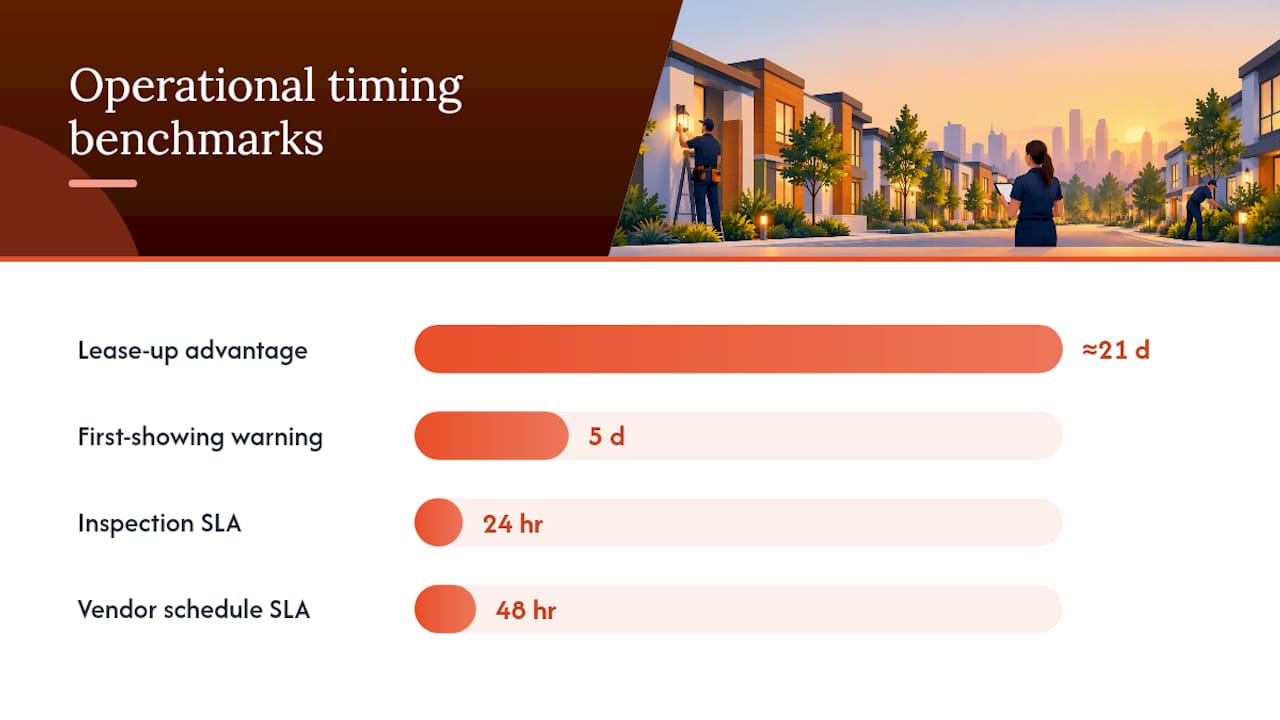
Leasing and lease-up pricing. During initial lease-up, pricing strategy matters more than almost anything else. Freddie Mac’s 2025 multifamily outlook projects rent growth around 2.2% and vacancy near 6.2% amid elevated new supply, conditions that reward operators who prioritize occupancy over chasing top-of-market rent. A community that fills units three weeks faster than a competitor, even at a slightly lower rent, usually wins on total revenue once you account for vacancy loss. Marketing cadence should ramp before certificate of occupancy, not after, and showings should be scheduled in tight windows to create visible momentum for prospects.
Turnover and maintenance. Unit turns need a standardized workflow: inspection within 24 hours of move-out, vendor scheduling within 48 hours, and a hard cap on turn time that gets tracked per unit, not just averaged across the portfolio. Preventative maintenance schedules matter even more in wood-framed construction, where moisture intrusion and pest issues compound quietly if ignored. In-house maintenance teams tend to win on speed and cost control for routine work, while specialized vendors still make sense for HVAC, roofing, and anything requiring licensed trades.
- Screen vendors on response time history, not just bid price.
- Require standardized punch lists so quality doesn’t vary by technician.
- Track maintenance cost per unit monthly, not annually, to catch cost creep early.
Resident experience. Renewal rates rise when residents have an easy way to submit requests, pay rent, and get community updates without calling an office. Digital self-service portals, group text or app-based communication for community events, and light amenity programming (a seasonal cookout, a pet meetup) build the kind of informal social pressure that keeps people renewing even when a competing community offers a few dollars less in rent.
Pro Tip: Track your “days to first showing” metric separately from “days to lease.” A gap of more than five days usually points to a marketing problem, not a pricing problem, and the fix is completely different.
Workflow automation and rent intelligence tools now handle a lot of what used to eat a leasing manager’s week: dynamic pricing recommendations, automated maintenance ticket routing, and renewal reminder sequences. None of that replaces judgment, but it does mean a smaller team can run a larger BTR footprint without dropping the details that drive renewals.
How Should You Finance a BTR Project Through Stabilization?
BTR projects typically move through three financing stages, and the transition between them is where inexperienced investors lose the most value.
Acquisition, development, and construction (AD&C) loans fund the build itself and carry the highest rate and the shortest horizon of any financing in the project’s life. Once construction wraps, bridge or warehouse facilities often step in to cover the lease-up period, buying time for occupancy to stabilize before a lender will commit to permanent financing. Residential transition lending has become an increasingly important channel for exactly this gap, supporting builders and BTR sponsors who need capital between construction completion and stabilized cash flow.
Lease-up velocity and net effective rent are the two numbers that determine when and how favorably you can refinance into permanent debt. Lenders want to see occupancy climb predictably and rent concessions shrink over time. A community that stalls at 70% occupied for three straight months looks materially riskier to a permanent lender than one that climbed steadily from 40% to 85% over the same window, even if the final numbers land close together.
A few practical moves protect your optionality during this stretch:
- Phase your rollout so you’re never leasing up an entire 200-unit community at once. Deliver in blocks of 40 to 60 units.
- Keep a contingency reserve equal to at least a few months of debt service, separate from your operating account.
- Set lease-up staging targets (25%, 50%, 75%, stabilized) tied to specific marketing and pricing adjustments, so you’re not improvising when occupancy stalls.
The Lending Gurus team, which works with small builders and investors on construction and bridge financing, points out that the biggest financing mistake sponsors make is underestimating how long lease-up will take in a high-supply market, then scrambling for bridge capital at worse terms than they could have locked in earlier.
What KPIs Actually Tell You How a BTR Portfolio Is Performing?
Six metrics cover almost everything an investor or manager needs to know, and each one should be tracked at both the lease-up stage and the stabilized stage, since the target numbers differ.
- Occupancy rate: units occupied divided by total units. Lease-up targets typically climb in phases; stabilized portfolios should hold above 93% to 95%.
- Net effective rent: gross rent minus concessions, averaged across the lease term. This is the number that actually predicts revenue, not the sticker rent.
- Turnover cost per unit: total cost to prep a vacated unit for re-lease, including cleaning, repairs, and marketing. Rising turnover cost per unit without a corresponding rent increase is an early warning sign.
- Maintenance cost per unit: monthly maintenance spend divided by total units, tracked separately from capital improvements.
- Renewal rate: the share of expiring leases that renew. This is the single best proxy for resident satisfaction you’ll get without running a survey.
- NOI margin: net operating income as a percentage of gross rental revenue, the number that ultimately determines asset value.
Market Snapshot: With Freddie Mac projecting vacancy near 6.2% amid high new supply, portfolios tracking occupancy weekly during lease-up and monthly once stabilized will catch softening demand months before it shows up in a quarterly P&L.
Weekly leasing reports and monthly full P&L reviews give most operators the right cadence. A dashboard that surfaces occupancy, net effective rent, and open maintenance tickets on one screen lets a regional manager spot a problem property before it drags down portfolio-wide numbers.
How Does a Real Operator Run BTR at Scale?
Some real estate companies structure their teams into pods rather than functional silos, meaning a single group handles leasing, maintenance coordination, and resident communication for its assigned properties instead of routing every request through a centralized call center. That structure shortens response time and gives residents a consistent point of contact, which matters more in BTR communities than scattered single-family portfolios because word travels fast when a community shares amenities and common areas.
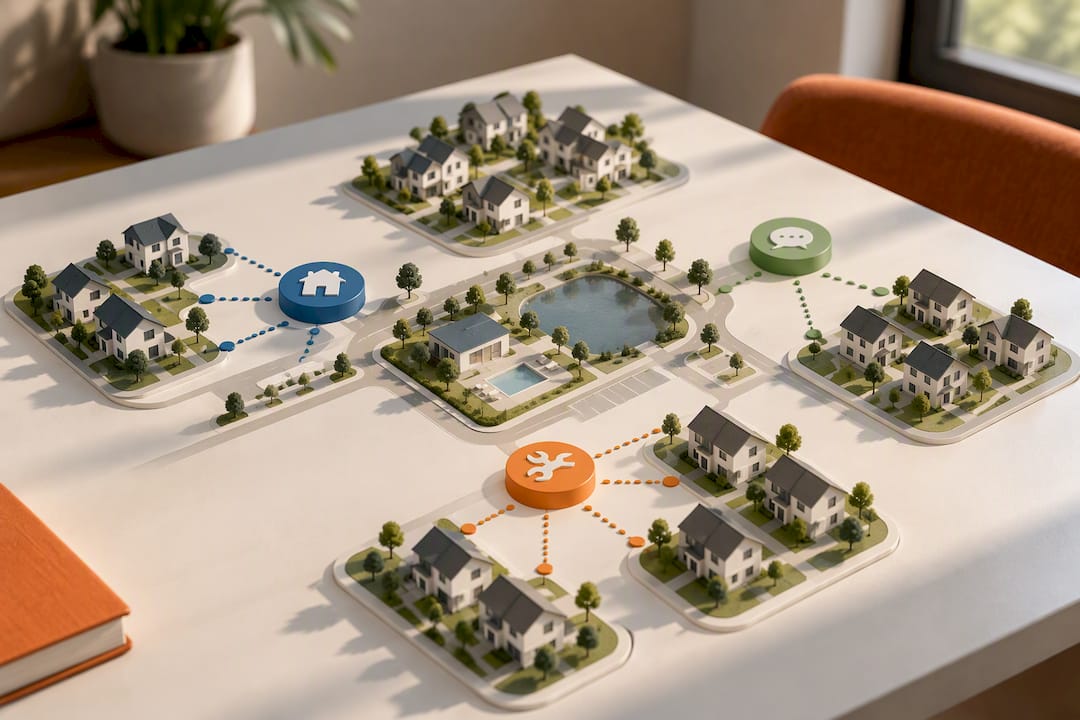
In-house maintenance can be a deliberate choice, with repair crews on staff instead of routing work orders through third-party vendors to obtain tighter control over turn times and consistent quality across units, factors that directly support renewal rates. Renovation and project oversight often involve dedicated project management functions that track capital improvements from scope to completion rather than leaving that coordination to available contractors.
A practical checklist drawn from how Auben approaches BTR operations:
- Screen and place tenants with a process built for speed without skipping the background and income verification steps that reduce eviction risk later.
- Run pre-turn inspections before a lease term ends, not after move-out, to shorten the gap between vacancy and re-lease.
- Track builder and appliance warranties against a shared calendar so nobody pays out of pocket for a repair still covered under warranty.
- Run resident retention touchpoints, lease renewal outreach at 90 days out, not 30, so residents have time to plan instead of defaulting to a competitor’s move-in special.
Auben Realty has applied this model across 2,700 properties in ten regional markets, a scale that only works with the kind of standardized process this section describes.
Who Should Invest in BTR, and What Risks Should Worry You?
BTR fits investors with real staying power: enough capital to absorb a slower lease-up cycle, a long hold horizon, and genuine tolerance for development timeline risk. It’s a poor fit for anyone expecting quick turnaround or unwilling to underwrite a project that might take 18 to 24 months to stabilize.
The risks worth losing sleep over aren’t exotic. Supply cycles can flood a submarket with new units right when you’re leasing up, financing rates can shift underneath a project mid-construction, and zoning or permitting delays can push your timeline by months you didn’t budget for. Execution risk, simply failing to run leasing and maintenance well once doors open, does more damage to returns than any of the macro risks combined, because it compounds every month you’re understaffed or under-processed.
Diversifying across a few markets instead of concentrating in one metro reduces exposure to any single local supply cycle. Phasing development in blocks rather than delivering an entire community at once limits how much vacancy risk hits you at any given moment. And underwriting conservatively, assuming rent growth closer to the muted end of current projections rather than the optimistic end, protects you from the refinancing surprises that catch overleveraged sponsors off guard.
— MediaBeast
Let Auben Realty Handle the Operations While You Focus on Returns
Running BTR operations well means solving leasing, maintenance, and resident retention simultaneously, and most independent investors don’t have the staff to do all three without dropping something. Auben Realty’s Multifamily & Build-to-Rent Services exist specifically to close that gap, pairing pod-based property teams with in-house maintenance and investor-focused reporting so owners get consistent execution instead of a patchwork of vendors and part-time attention.
When you bring a BTR portfolio to Auben Realty, the scope typically includes leasing and tenant placement, preventative and responsive maintenance handled in-house, renovation oversight through dedicated project management, and regular financial reporting that tracks the same KPIs covered above, occupancy, net effective rent, turnover cost, and NOI margin, so you’re never guessing how a property is performing. If you’re weighing whether to self-manage or bring in a partner, start with a look at Auben Realty’s property management services to see how the scope lines up with what your portfolio actually needs.
Primary Sources and Further Reading
The Census Bureau’s Characteristics of New Housing (CHARS) highlights provide the construction and unit-size data behind BTR’s design economics, including framing methods and square footage comparisons between rental and for-sale product. The Urban Institute’s research on residential transition lending explains the four common BTR ownership models and the financing channels supporting them. Freddie Mac’s 2025 multifamily outlook offers the rent growth and vacancy projections that inform lease-up pricing strategy throughout this guide.
Sources
FAQ
Is Build-to-Rent Profitable?
BTR can be profitable when occupancy and maintenance costs are managed tightly, since the model’s efficiencies (standardized units, centralized management) tend to lower per-unit operating costs compared to scattered single-family rentals. Profitability depends heavily on lease-up execution, given that Freddie Mac projects rent growth around 2.2% and vacancy near 6.2% in a high-supply environment, meaning occupancy discipline matters more than aggressive rent pricing right now.
What Is the 2% Rule for Rentals?
The 2% rule is a rough screening tool suggesting a rental property’s monthly rent should equal at least 2% of its purchase price to indicate strong cash flow potential. It’s rarely achievable in most BTR markets today given current construction and land costs, and most experienced operators treat it as a rough filter rather than a real underwriting standard.
Is Rent-to-Own a Good Way to Build Credit?
Rent-to-own arrangements can help some renters build savings toward a down payment, but they don’t automatically build credit unless the specific agreement reports rent payments to credit bureaus, which many do not. This is a separate model from build-to-rent, which is standard rental housing designed for renting rather than a path to ownership.
What Are the Disadvantages of Build-to-Rent?
BTR requires more upfront development capital and carries construction and lease-up timeline risk that scattered single-family rentals don’t face. It also demands specialized operational infrastructure, in-house or contracted maintenance, centralized leasing, and community management, since a poorly run BTR community loses residents faster than a single scattered rental would.
How Much Does Property Management Cost for a BTR Community?
Property management pricing depends on portfolio size, scope, and market, and Auben Realty’s current rates are available directly through its property management page rather than published as a flat figure. Reaching out for a scope conversation is the fastest way to get an accurate number for your specific portfolio.